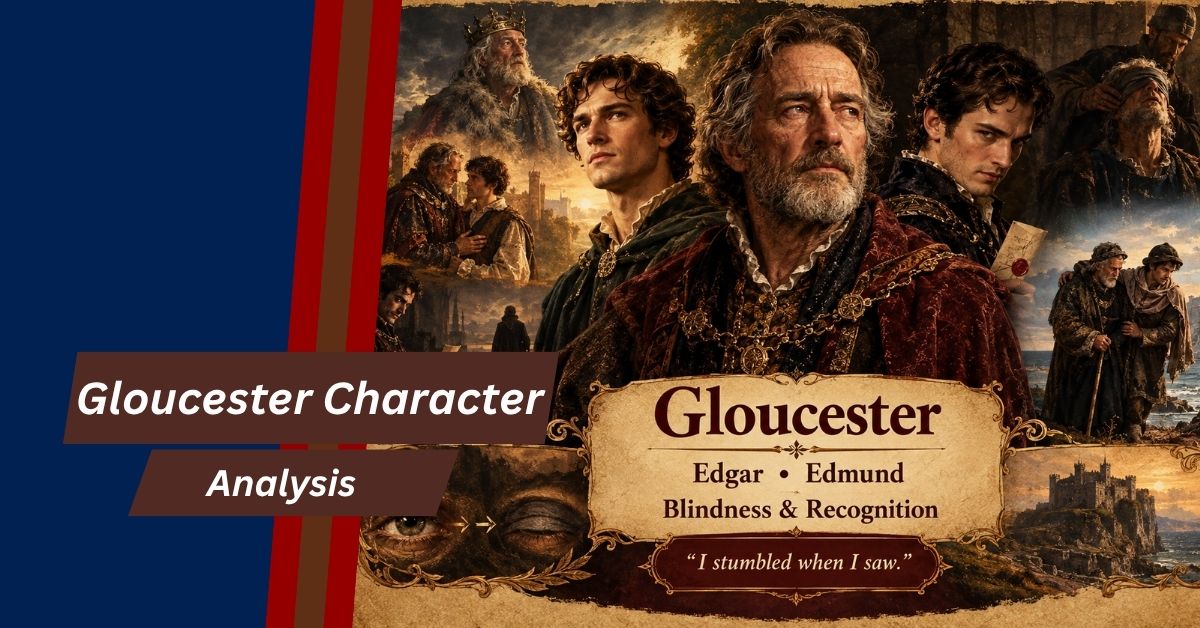
Gloucester in King Lear is a nobleman whose crisis mirrors the play’s tragedy. As Lear’s subject and father of Edgar and Edmund, he becomes caught between loyalty and conflict. His trust in Edmund’s deception leads him to reject Edgar, while his loyalty to Lear brings danger.
After betrayal and blindness, Gloucester gains understanding of his children. His journey connects judgment, loyalty, suffering, and recognition. His remark, “I stumbled when I saw,” captures the paradox of his character: he understands truth only after losing his sight.
Who Is Gloucester in King Lear?
Gloucester is the Earl of Gloucester and a nobleman in Lear’s kingdom. He has two sons: Edgar, his legitimate heir, and Edmund, his illegitimate son.
At first, he appears secure in his family and position, but Edmund’s resentment exposes weaknesses. Gloucester believes Edmund’s false evidence and rejects Edgar.
Later, he supports Lear against the treatment of the king, bringing danger upon himself. His choices drive the subplot. Through Gloucester, Shakespeare presents another father who mistakes deception for truth, creating a family crisis that parallels Lear’s.
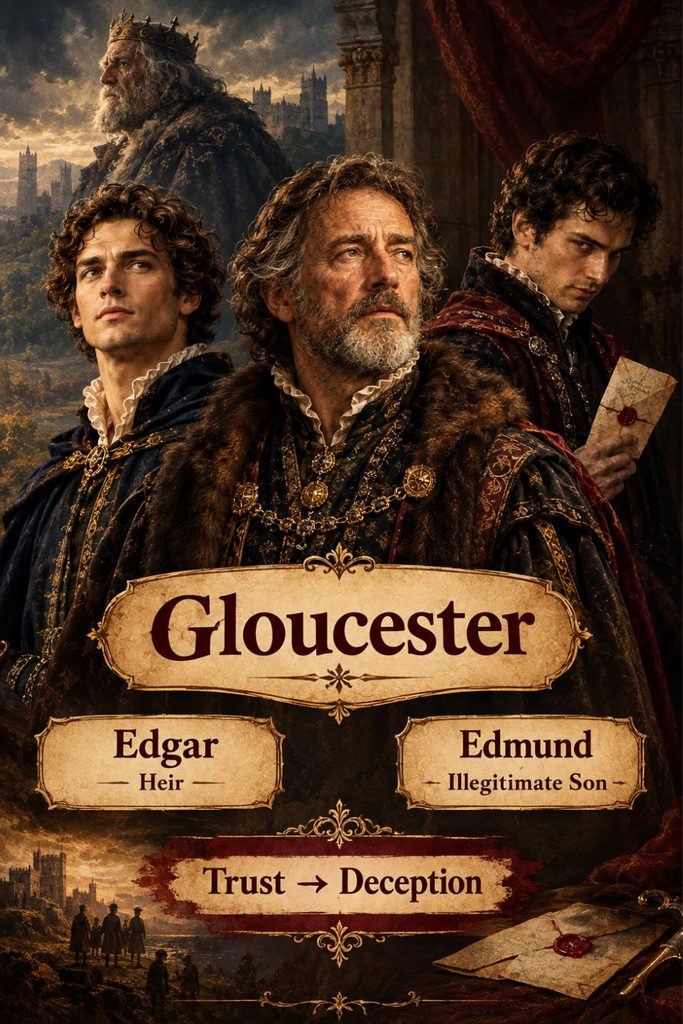
Table of Contents
Gloucester’s Character Traits in King Lear
Gloucester is affectionate, loyal, trusting, and compassionate, but he is also credulous. He accepts appearances too quickly instead of testing what he sees. Edmund understands this weakness and turns his father’s trust against Edgar.
Gloucester’s early jokes about Edmund’s illegitimate birth also help explain the resentment behind Edmund’s ambition, though they do not excuse his crimes.
Gloucester remains loyal to Lear during the storm. His references to “these late eclipses in the sun and moon” show his tendency to connect human disorder with cosmic signs.
Yet suffering changes his understanding. After losing his sight, he begins to recognize his earlier error and wishes Edgar well: “If Edgar live, O, bless him!”
I tell my students that Gloucester is not simply foolish. His tragedy comes from trusting convincing appearances without examining the truth behind them.
King Lear and Gloucester Relationship
Lear and Gloucester face different family conflicts, but Shakespeare places their experiences beside each other. Lear misjudges Cordelia and trusts Goneril and Regan. Gloucester misjudges Edgar and trusts Edmund. Lear banishes Cordelia, while Gloucester rejects Edgar and drives him away.
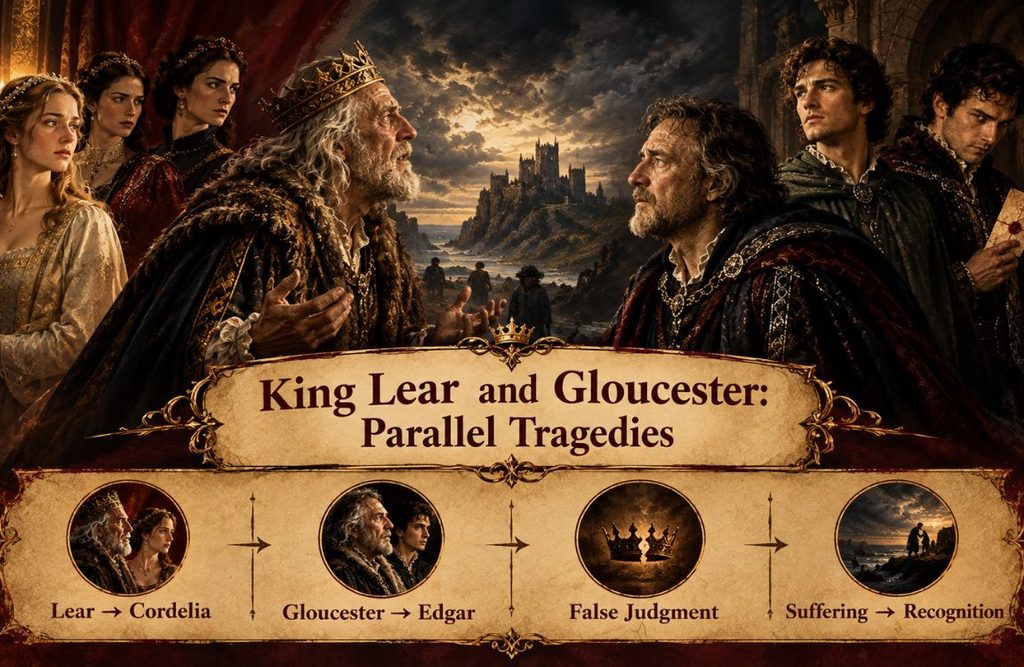
Both fathers lose their security and enter a world of suffering. Lear gradually recognizes Cordelia’s honesty, while Gloucester learns the value of Edgar’s loyalty. Gloucester’s words,
“I have no way, and therefore want no eyes,”
express the despair that follows his physical and emotional collapse.
Lear’s plot examines kingship, authority, and parental love, while Gloucester’s focuses more closely on inheritance, illegitimacy, and rivalry between brothers. Together, the plots show how judging by appearances can destroy family bonds.
Gloucester and Edmund Relationship
Edmund’s betrayal grows from his resentment over illegitimate birth and his desire to replace Edgar. He stages evidence suggesting that Edgar is plotting against Gloucester. Gloucester believes the forged letter and turns against his legitimate heir.
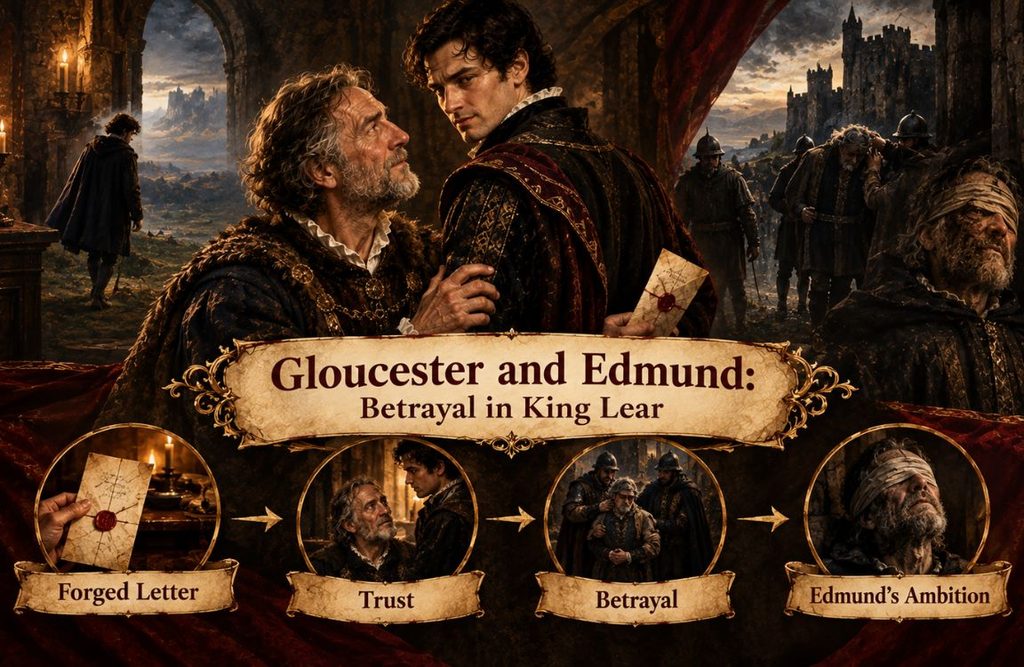
Later, Gloucester secretly plans to help Lear. Edmund reports this information to Cornwall and Regan, who regard Gloucester’s action as treason. Gloucester is arrested, and Cornwall and Regan oversee his punishment. His continued trust in Edmund makes the betrayal especially painful.
Edmund’s words, “Now, gods, stand up for bastards!” reveal his anger and determination to challenge the social position assigned to him. Gloucester’s readiness to believe false evidence gives Edmund the opportunity to turn resentment into action.
Gloucester and Edgar Relationship
At first, Gloucester loves Edgar but quickly turns against him because of Edmund’s deception. Edgar is forced to flee and disguises himself as Poor Tom. Gloucester later meets his own son without recognizing him.
After Gloucester is blinded, Edgar secretly protects him. At Dover, Edgar prevents his father from taking his own life. Instead of taking revenge, Edgar guides Gloucester through despair.
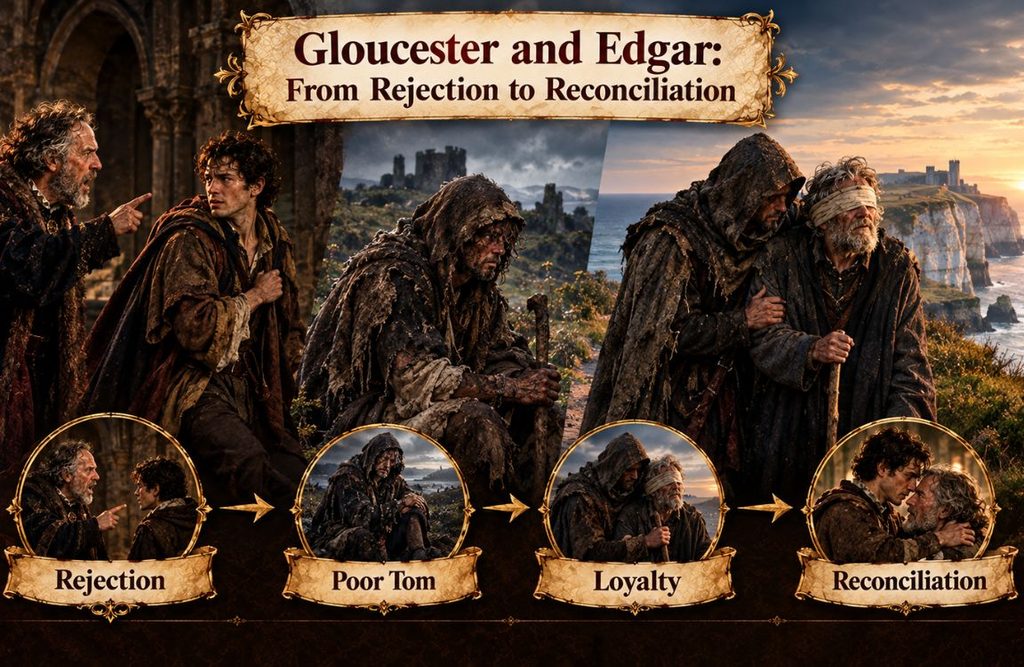
Their relationship gains force through the contrast between sight and understanding. While he could see, Gloucester failed to recognize Edgar’s loyalty. After becoming blind, he begins to understand what he had previously missed.
When Edgar finally reveals himself, reconciliation becomes possible, but it cannot erase the suffering caused by Gloucester’s mistake.
Who Blinds Gloucester in King Lear?
Gloucester is blinded by Cornwall, while Regan is present and participates in the cruelty. Gloucester has helped Lear and is arrested after Edmund exposes his plans. Cornwall orders that Gloucester’s eyes be removed.
A servant tries to defend Gloucester, wounds Cornwall, and is killed. Cornwall later dies from the wound.
The scene has strong symbolic force because Gloucester’s physical blindness follows his earlier failure to see Edmund’s deception. Blindness does not automatically make him wise; Gloucester remains desperate.
His cry, “All dark and comfortless!” expresses both physical darkness and emotional suffering.
The symbolism grows from his error: Gloucester trusted Edmund and rejected Edgar.
What Happens to Gloucester in King Lear?
Gloucester’s journey moves from confidence to deception, despair, and recognition. Edmund deceives him, Edgar is driven away, and Gloucester continues to support Lear. After Edmund exposes Gloucester’s support for the king, Gloucester is captured and blinded.
Believing that life has become unbearable, Gloucester seeks death. Edgar, still disguised as Poor Tom, protects him at Dover. When Gloucester thinks he has fallen from a cliff, Edgar pretends that the fall has been survived and speaks to him as though he has witnessed a miraculous escape. The deception is meant to restore his will to live.
Gloucester eventually meets Edgar and learns that the son he rejected has remained faithful. Recognition comes after suffering, but cannot undo his earlier judgment.
When Does Gloucester Die in King Lear?
Gloucester dies near the end of the play, after Edgar reveals his identity and their relationship is restored. Gloucester experiences joy at recognizing Edgar, but that joy is mixed with grief over what has happened. Shakespeare describes his heart caught “’Twixt two extremes of passion, joy and grief.”
His death follows mixed relief, joy, and sorrow. The moment completes his movement from mistaken judgment to recognition, while also showing how late truth can arrive.
Gloucester in King Lear Quotes
| Quote | What it shows |
| “I stumbled when I saw.” | He recognizes his earlier failure of judgment. |
| “As flies to wanton boys are we to th’ gods.” | His suffering produces a bleak view of human life. |
| “All dark and comfortless!” | His blindness expresses physical and emotional suffering. |
| “If Edgar live, O, bless him!” | He shows renewed love and concern for Edgar. |
| “I have no way, and therefore want no eyes.” | His despair links blindness with hopelessness. |
| “These late eclipses in the sun and moon.” | He connects human disorder with cosmic signs. |
FAQs:
Is Gloucester a good father in King Lear?
Gloucester loves both sons, but his careless jokes about Edmund’s illegitimacy and his quick belief in false evidence make his fatherhood flawed.
What is Gloucester’s greatest mistake?
His greatest mistake is trusting Edmund’s false evidence while failing to recognize Edgar’s loyalty.
Does Gloucester recognize Edgar before he dies?
Yes. Edgar reveals his identity before Gloucester dies, allowing father and son to reconcile after years of rejection.
What does Gloucester’s story add to King Lear?
His subplot parallels Lear’s family crisis while developing themes of inheritance, illegitimacy, betrayal, blindness, and late recognition.
Why does Gloucester help Lear?
Gloucester helps Lear because he remains loyal to the king and cannot accept the harsh treatment Lear receives. His decision puts him in danger and contributes to his arrest.
Conclusion:
Gloucester’s tragedy is built on a painful contradiction: he loses his sight before he learns how to see. His trust in Edmund and rejection of Edgar lead to betrayal, blinding, and despair, while suffering helps him recognize the son who truly loves him.
I encourage students to read Gloucester’s story beside Lear’s, but not treat the plots as identical. Gloucester adds a distinct conflict involving inheritance, illegitimacy, brotherly rivalry, and parental judgment. His reconciliation with Edgar is tender, yet his death shows that understanding may come too late.