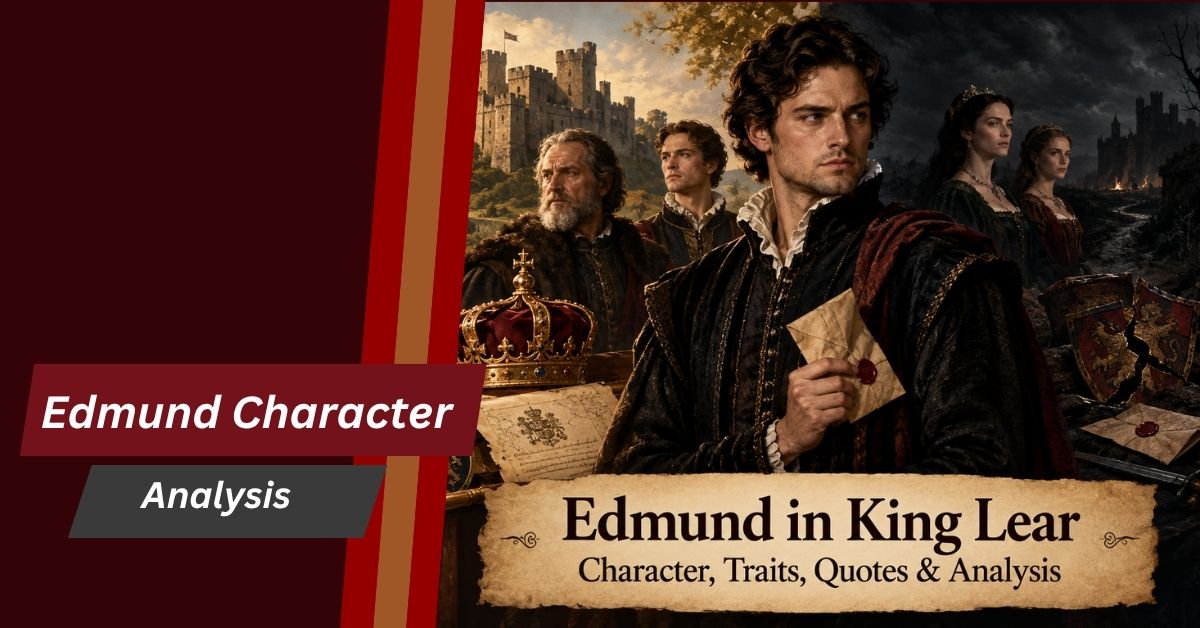
Edmund in King Lear begins with a wound: he is called “base” because he was born outside marriage. Yet his anger becomes dangerous. Gloucester’s illegitimate son wants the inheritance and status attached to Edgar’s position, and he decides to take them through deception.
His complaint about social inequality has some force, but his response is a choice. He turns resentment into manipulation, betrayal, and violence. When does a grievance become an excuse for cruelty?
Who Is Edmund in King Lear?
Edmund is Gloucester’s illegitimate son and Edgar’s younger half-brother. He is a central antagonist. Edgar, as Gloucester’s legitimate elder son, stands first in the inheritance. Edmund feels excluded from the land, status, and recognition attached to his brother’s position.
He makes Gloucester believe that Edgar is plotting against him. Once Edgar flees, Edmund gains his father’s confidence and later betrays Gloucester to Regan and Cornwall.
His intelligence allows him to exploit the social order, but his ambition turns his grievance into a destructive struggle for power.
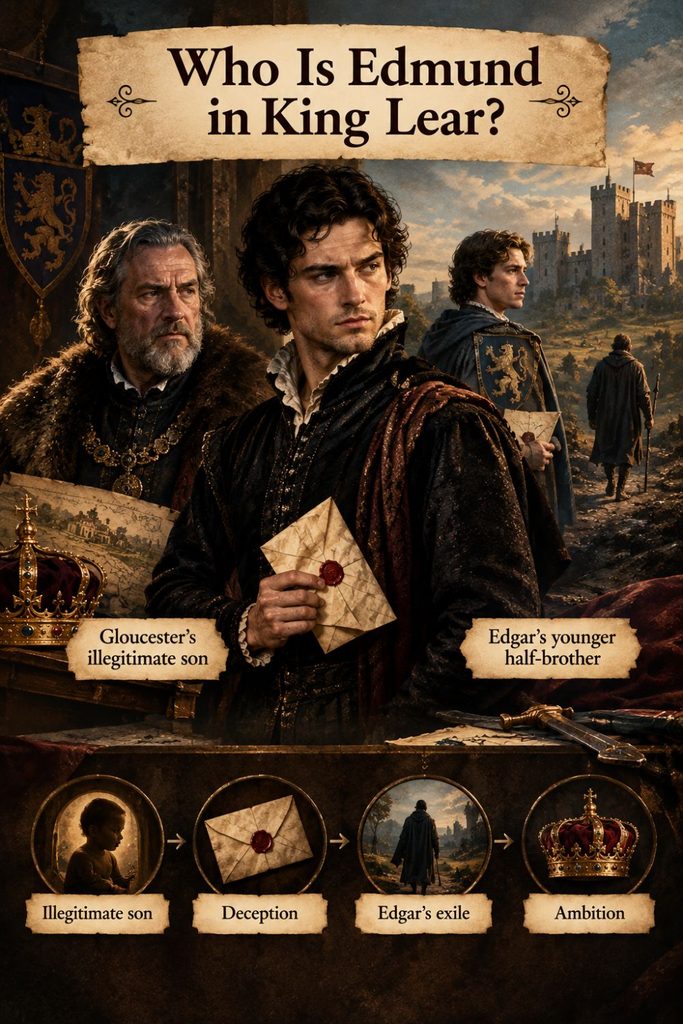
Table of Contents
Edmund’s Character and Traits
Edmund is intelligent, ambitious, manipulative, opportunistic, and ruthless. His greatest weapon is his ability to control information. He gives people a false story and lets them act on it.
I often tell my students that Edmund’s real weapon is not his sword but his understanding of assumptions. Gloucester wants to trust his sons, so Edmund gives him evidence that confirms his fears. Edgar trusts his brother, so Edmund turns that trust against him.
His resentment fuels his ambition, but his decisions determine where that ambition leads. As power becomes more important to him than family loyalty, Gloucester and Edgar are no longer loved ones. They become obstacles in his path.
Edmund’s Illegitimacy and Ambition
Edmund’s famous question, “Why bastard? Wherefore base?”, expresses his anger at the stigma attached to illegitimacy. In the play, legitimacy affects inheritance and social standing.
Yet Edmund is also Gloucester’s younger son. Even if he had been legitimate, Edgar’s position as the elder son would still give him priority under primogeniture. Edmund therefore wants more than freedom from the stigma of birth. He wants to overturn the hierarchy that places Edgar above him.
His grievance explains his anger, but it does not justify forgery, betrayal, or murder. Shakespeare gives Edmund a recognizable wound and then shows how he responds to it.
Edmund’s Soliloquy: “Thou, Nature, Art My Goddess”
Edmund announces his rebellion in the soliloquy beginning in Act 1, Scene 2, “Thou, Nature, art my goddess.” He rejects the social customs that place Edgar above him because of birth. His cry, “Now, gods, stand up for bastards!”, turns private resentment into open defiance.
Edmund invokes Nature as an alternative to inherited social law, but Shakespeare complicates that argument. Edmund turns his rejection of social hierarchy into a rejection of moral restraint.
He wants ability to matter more than legal status. Yet an irony appears: he attacks a hierarchy he considers unjust, then creates his own harsh system in which the clever and ruthless take what they can.
The soliloquy reveals both the appeal and danger of his argument. His desire for freedom from inherited status soon becomes a license to deceive.
Edmund and Edgar in King Lear
Edgar possesses what Edmund most desires: legitimacy, inheritance, and Gloucester’s place in the family. Edmund therefore treats his brother as both relative and rival.
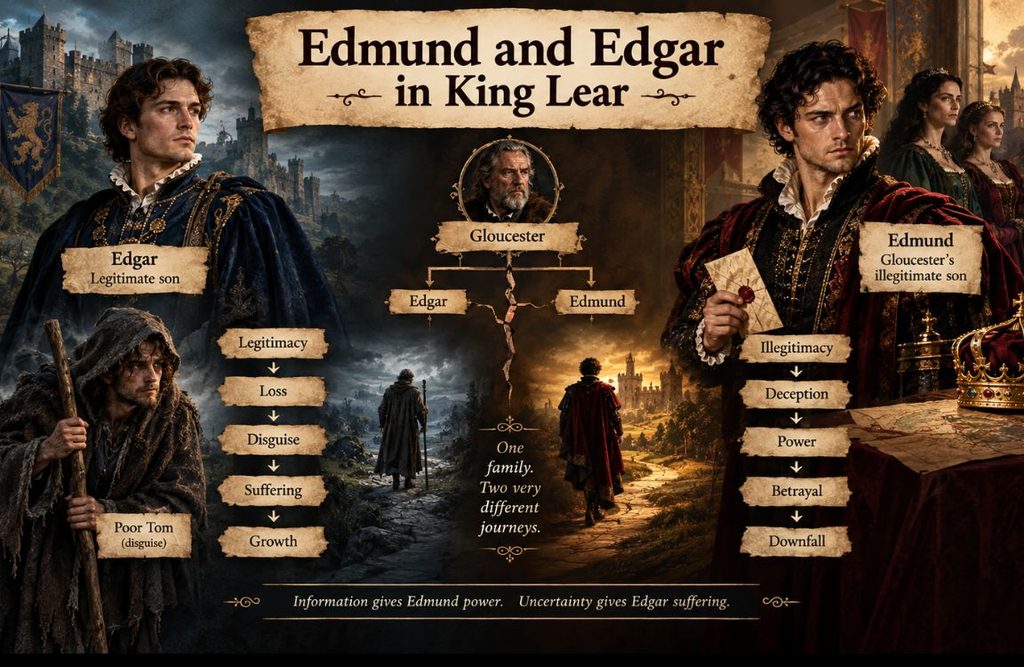
His forged letter makes Gloucester suspect Edgar. He then persuades Edgar that Gloucester is angry with him, pushing him into flight. Edmund succeeds because he controls the story each brother hears.
The brothers become foils. Edgar loses his identity for a time, but suffering develops his understanding. Edmund gains status, yet his success costs moral restraint. Their stories suggest that conduct matters more than birth.
Edmund and Gloucester: How Does Edmund Betray His Father?
Gloucester accepts Edmund as his son, and Edmund turns that trust against him. The forged letter begins the deception, but the betrayal becomes more serious when Edmund reports Gloucester’s support for Lear to Cornwall.
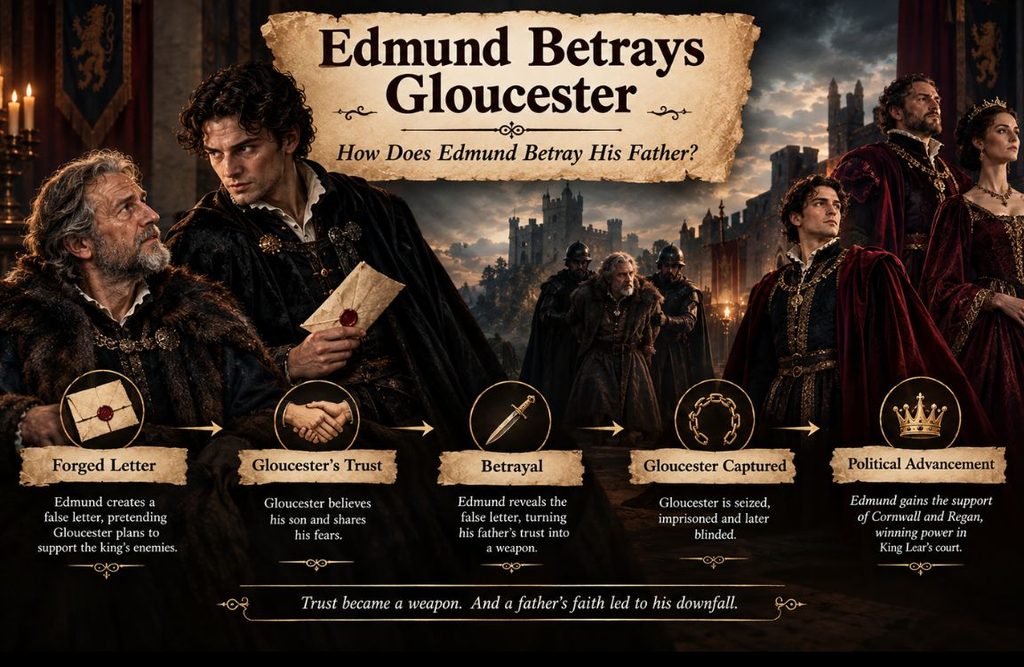
Gloucester is captured and brutally punished. Once his father becomes an obstacle to his advancement, Edmund no longer treats him as a loved one. He uses Gloucester’s trust to gain political power, showing how far his ambition has taken him.
Edmund, Goneril, and Regan
As Edmund’s fortunes rise, he attracts the attention of both Goneril and Regan. Their interest in him is not simply romantic. Edmund sees that each sister can strengthen his position, especially as he moves into the political space once occupied by their husbands.
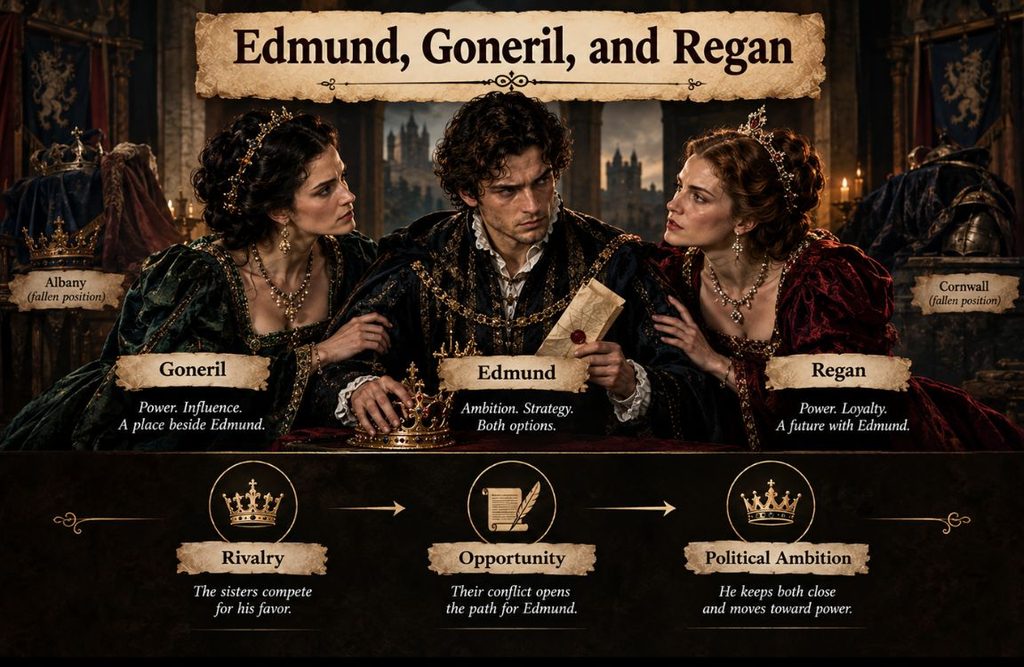
His ambition has grown beyond Edgar’s inheritance. He now wants political power and uses the rivalry between the sisters to advance himself. Rather than choosing loyalty, he keeps both possibilities open while their competition works in his favor.
The episode reveals how completely Edmund has begun to treat personal relationships as opportunities for power.
Edmund as a Villain: Is He Truly Evil?
Edmund’s grievance is understandable, but his response makes him villainous. He does not simply challenge an unfair inheritance system. He deceives Edgar, betrays Gloucester, exploits Goneril and Regan, and eventually orders the execution of Lear and Cordelia.
I would not call Edmund evil because he is illegitimate. He becomes morally corrupt through repeated choices. This distinction matters because it prevents him from becoming a stereotype. We can understand why Edmund feels wronged without accepting what he does with that feeling.
His villainy ultimately rests on choice. He repeatedly chooses personal advantage over loyalty and, in the end, is willing to sacrifice human lives for power.
Edmund Quotes in King Lear
Edmund’s major quotations trace his movement from resentment to ambition and, finally, to a late recognition of the consequences of his actions.
“Thou, Nature, art my goddess.” This announces his rejection of inherited social rules.
“Why bastard? wherefore base?” The question exposes the wound beneath his rebellion.
“Now, gods, stand up for bastards!” His complaint becomes a declaration of defiance.
“The younger rises when the old doth fall.” Edmund sees another person’s collapse as an opportunity for advancement.
“Some good I mean to do, /Despite of mine own nature.” This reveals Edmund’s late remorse. After his defeat, he tries to stop Lear and Cordelia’s execution, but it’s too late.
Together, these lines show how Edmund’s resentment develops into ruthless ambition and ends in defeat.
How Does Edmund Die in King Lear?
Edmund dies after Edgar defeats him in single combat. Edgar reveals his identity after wounding him, forcing Edmund to face the brother he betrayed.
Near death, Edmund learns that Lear and Cordelia are to be executed and tries to stop the order.
His attempt to reverse the order suggests late remorse, but it comes too late to save Cordelia
Edmund’s Role in King Lear
Edmund’s role extends beyond his subplot. His story mirrors Gloucester’s family crisis and reinforces one of the play’s central dangers: misjudging people through appearances and false evidence.
Lear rejects Cordelia because he mistakes honest silence for a lack of love. Gloucester, in a similar way, trusts Edmund’s fabricated evidence and turns against Edgar. Both fathers misread their children, and both families suffer because of that failure of judgment.
Edmund also develops the play’s ideas about legitimacy, ambition, betrayal, and inherited status. He challenges a social order that places Edgar above him because of birth, yet he does not replace that order with justice. Instead, he uses deception to gain the power he believes he deserves.
This creates an important contrast with Lear. Lear loses authority through disastrous judgment, while Edmund gains authority through deliberate deception. Their stories show how misjudgment and abused power can damage both families and society.
FAQs:
Was Edmund jealous of Edgar in King Lear?
Yes. Edmund resents Edgar’s legitimacy, inheritance, and social position. He turns that resentment into a plan against Edgar.
Is Edmund smarter than Edgar in King Lear?
Edmund is more calculating at first. Edgar develops stronger judgment through suffering and ultimately defeats him. Cleverness is not wisdom.
Why does Edmund call Nature his goddess?
Edmund calls Nature his goddess because he rejects customs that rank him below Edgar. Nature represents freedom from inherited status.
Does Edmund regret his actions?
Near death, Edmund attempts to stop Lear and Cordelia’s execution. This suggests late remorse, but it cannot undo his crimes.
Is Edmund a tragic character or only a villain?
Edmund is best understood as a villain with tragic dimensions, not a tragic hero. His grievance is understandable, but his choices lead to his downfall.
Conclusion:
Edmund in King Lear begins by resisting a social system that marks him as “base.” His intelligence helps him challenge the position assigned to him, but his ambition destroys the moral limits that might have guided that challenge.
His downfall lies not in illegitimacy itself but in the choices he makes after feeling excluded.
Edmund remains compelling because Shakespeare shows both the wound and the wrongdoing. His grievance explains his anger. It does not excuse his cruelty.