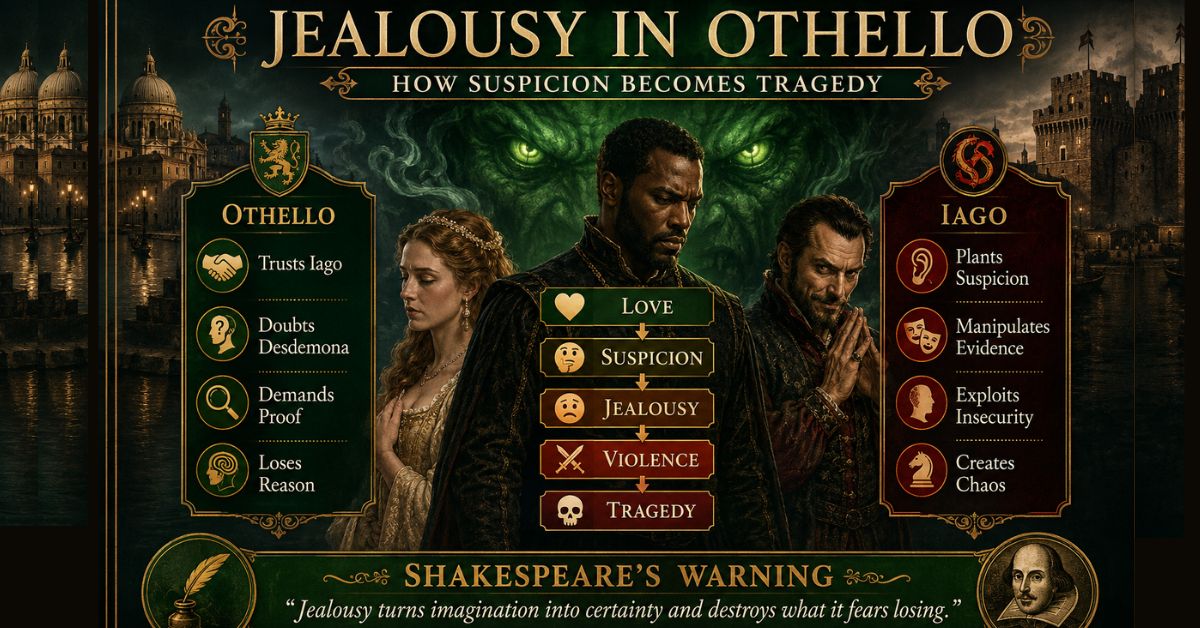
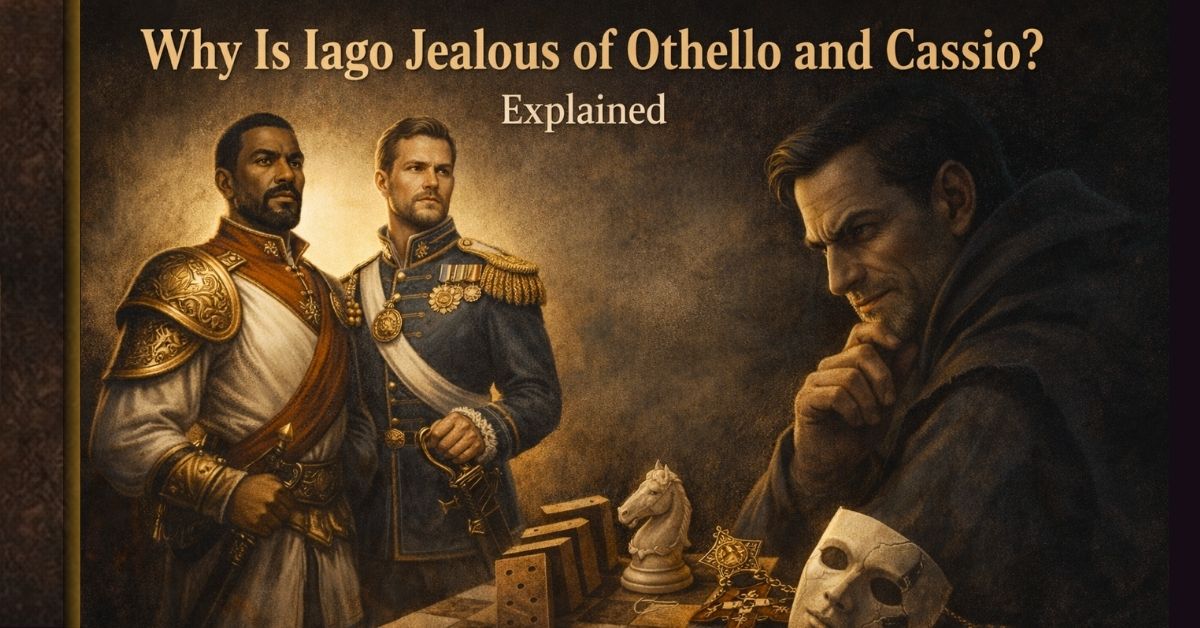
The ending of Othello is one of literature’s most devastating tragedies. Othello discovers Iago’s deception only after killing the innocent Desdemona. Emilia dies exposing the truth, Iago is captured but remains silent, Cassio restores order, and Othello takes his own life.
The final scene shows that even courage, love, and honour can collapse when trust is placed in deception instead of truth.
Table of Contents
Ending of Othello: Quick Summary
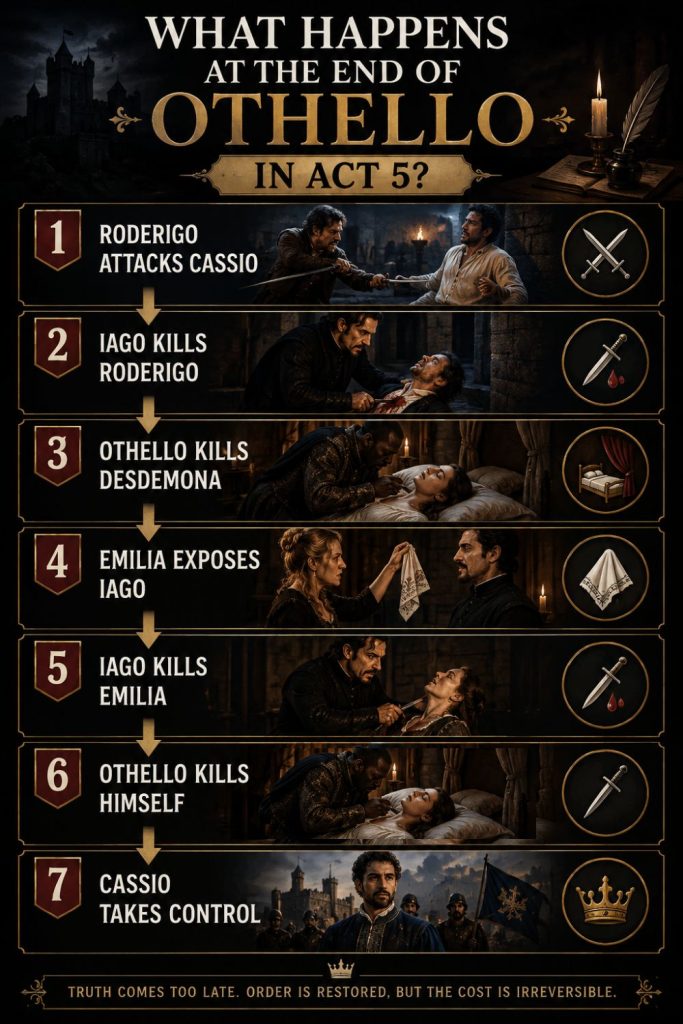
The ending of Othello in Act 5 moves swiftly from deception to disaster. Misled by Iago, Othello smothers Desdemona, believing she has been unfaithful. Emilia reveals the truth about the handkerchief and is murdered by Iago.
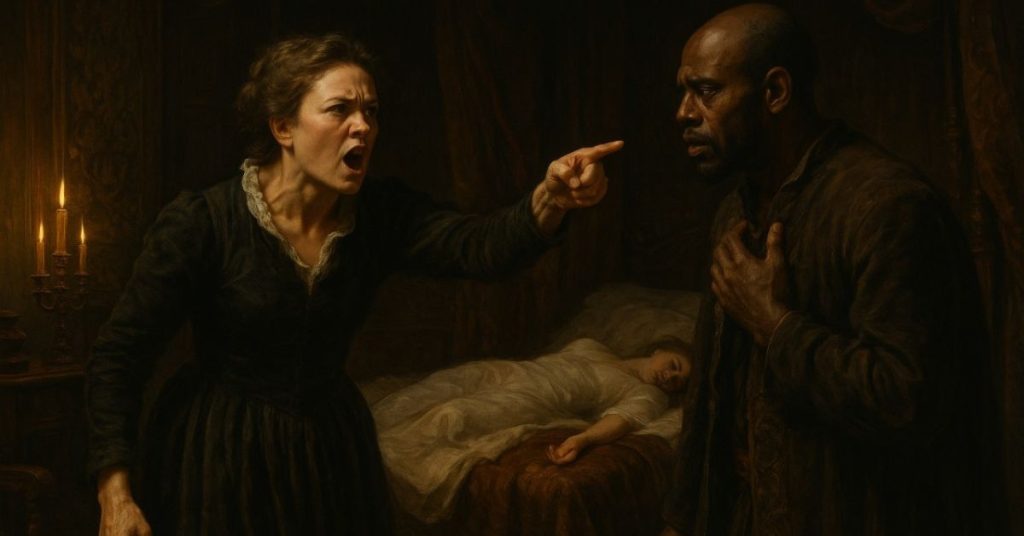
Earlier, Roderigo dies during the failed attack on Cassio, who survives despite his wounds. Realising his terrible mistake, Othello delivers his final speech, kisses Desdemona, and kills himself.
Iago is arrested but refuses to explain his actions, leaving justice incomplete even after the truth is known.
Want to see how the tragedy unfolds? Watch my short tutorial below to see what happens in the final moments of Othello and how Shakespeare brings the tragedy to its devastating end.
What Happens at the End of Othello in Act 5?
The final act begins with Iago’s last carefully planned scheme. He persuades Roderigo to attack Cassio, hoping both men will be removed. The plan backfires. Cassio is wounded but survives, while Iago secretly kills Roderigo to prevent him from revealing what really happened.
The action then shifts to Desdemona’s bedroom. Convinced by Iago’s lies that his wife has betrayed him, Othello smothers her, believing he is carrying out justice instead of committing a terrible crime.
The turning point comes when Emilia arrives. She exposes the truth about the handkerchief and reveals that Iago manipulated the evidence from the beginning. To silence her, Iago kills his own wife before attempting to escape, but he is captured.
Only then does Othello realise Desdemona’s innocence. Overcome with grief and guilt, he kills himself beside Desdemona.
The play ends with Cassio becoming governor of Cyprus, while Iago is led away for punishment. Order is restored, but the human cost can never be repaired.
Who Dies in the Ending of Othello?
| Character | Fate | Killed By | Why It Matters |
| Desdemona | Smothered | Othello | Innocence destroyed by deception. |
| Emilia | Stabbed | Iago | Dies exposing the truth. |
| Roderigo | Stabbed | Iago | Silenced to protect Iago’s plot. |
| Othello | Suicide | Himself | Accepts responsibility for his crime. |
Each death reflects a different consequence of Iago’s deception: innocence destroyed, truth defended, manipulation exposed, and guilt acknowledged through self-punishment.
Why Does Othello Kill Desdemona?
Othello kills Desdemona because he believes Iago’s false accusations of adultery. Convinced she has betrayed both his love and his honour, he mistakes murder for moral duty.
As I remind my students, this tragedy begins long before the bedroom scene. Iago patiently poisons Othello’s judgment through suggestion instead of proof. The handkerchief, once a symbol of love, becomes fabricated evidence of betrayal.
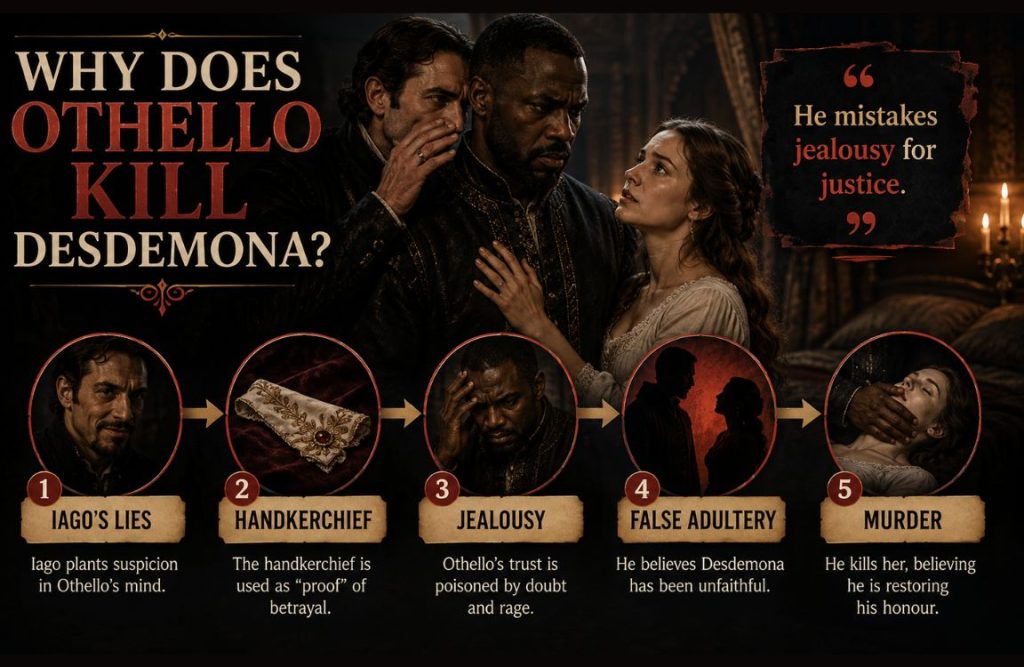
The deepest tragedy is that Othello never stops loving Desdemona. He genuinely believes he is protecting his honour, not killing an innocent wife. Once jealousy replaces trust, reason collapses.
By the time he discovers Desdemona’s innocence, nothing can undo his mistake, making this one of literature’s most heartbreaking acts of tragic misunderstanding.
Want a deeper understanding of why Othello turns against Desdemona and what leads to her tragic death? Watch my tutorial below for a clear analysis of the Desdemona death scene and the forces behind Othello’s fatal decision.
Why Does Othello Kill Himself?
Yes, Othello kills himself. After Emilia reveals Iago’s deception, he finally understands that Desdemona was completely innocent. The truth destroys the honourable image he had always held of himself.
Many students ask why Othello chooses death. The answer is simple: overwhelming guilt. He cannot live with the knowledge that he murdered the woman he loved while believing he was acting justly.
His final speech combines confession with self-judgment, but some critics detect another impulse as well. Even while admitting his crime, Othello carefully shapes the story future generations will tell about him.
Shakespeare leaves readers to decide whether this final act is complete honesty or one last attempt to preserve his honour.
Unable to restore Desdemona’s life, he chooses to bear the ultimate consequence of his own tragic mistake.
What Happens to Iago at the End of Othello?
Does Iago die? No. He survives the tragedy but loses everything that once gave him power.
After Emilia exposes the truth about the handkerchief, Iago murders her in a desperate attempt to silence her. He is quickly captured before escaping.
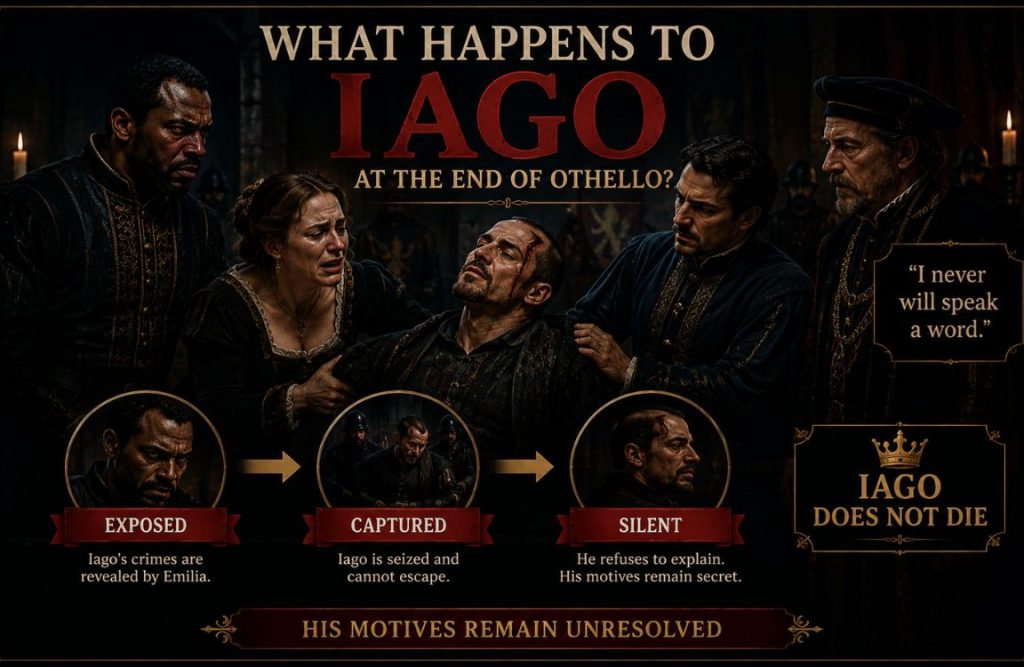
Questioned about his actions, he refuses to explain himself, declaring, “From this time forth I never will speak word.” His silence preserves the mystery surrounding his motives. Lodovico orders that he be imprisoned and punished according to his crimes.
Instead of receiving a quick death, Iago must live with complete exposure, stripped of authority, reputation, and control.
What Happens to Cassio at the End of Othello?
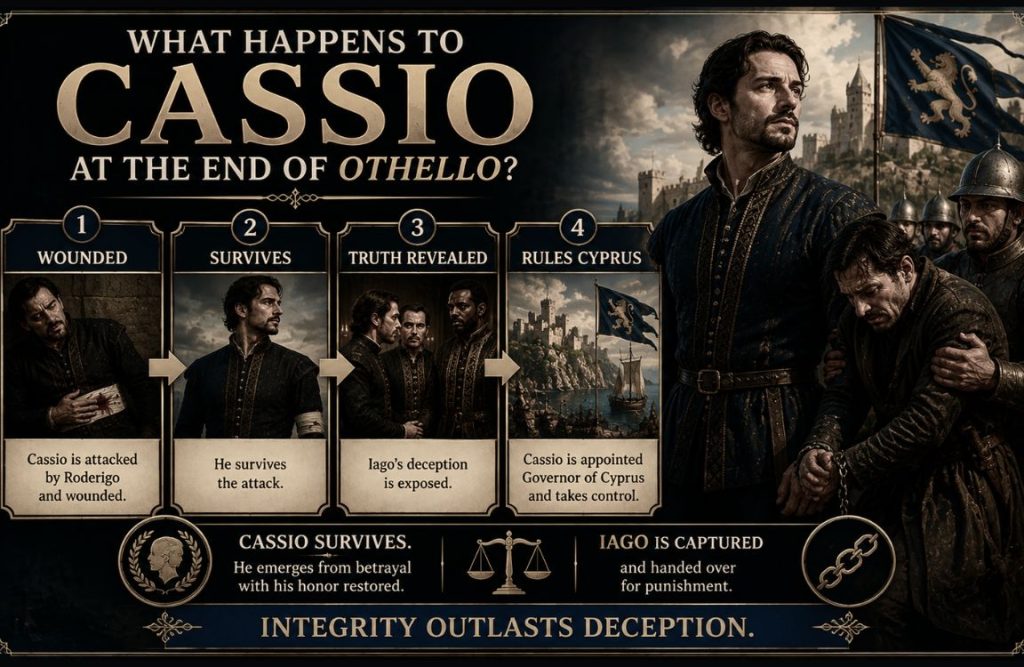
Cassio survives Iago’s final plot despite being seriously wounded during Roderigo’s attack. His survival allows the truth to emerge and Iago’s deception to be exposed.
After Othello’s death and Iago’s arrest, Cassio is appointed governor of Cyprus. His promotion restores the reputation that Iago tried to destroy and offers the play’s clearest sign that integrity can outlast corruption.
Othello’s Final Speech Explained
Othello’s final speech blends confession, remorse, and a final attempt to shape how he will be remembered. Standing beside Desdemona’s body, he describes himself as “one that loved not wisely but too well.”
The line acknowledges that his love was sincere but fatally misguided. He recognises that deep affection without sound judgment led him to commit an unforgivable act.
He then recalls killing the “circumcised dog,” turning the image upon himself. The enemy is no longer an outsider but the man he has become through jealousy and misplaced trust.
His closing words, “I kissed thee ere I killed thee… to die upon a kiss,” bring love and regret together in one unforgettable image. As I tell my students, that final kiss is both a farewell to Desdemona and a judgment upon himself.
Shakespeare’s Message in the Ending of Othello
The ending of Othello teaches that jealousy becomes truly dangerous when it is fed by deception and accepted without question. As I remind my students, Iago never controls Othello by force. He controls him by shaping how Othello interprets what he sees and hears.
Yet the play never removes Othello’s responsibility for his choices. Others may influence our decisions, but they cannot remove our responsibility for them.
Shakespeare’s lasting lesson is simple: trust should be guided by judgment, not suspicion or appearances.
Why the Ending of Othello Remains So Powerful
Othello’s ending remains powerful because Shakespeare refuses to offer the comfort of a tidy resolution. Desdemona, Emilia, and Roderigo die, while Iago is left alive to face punishment beyond the play’s final scene. Justice begins, but it never fully repairs the damage.
Othello discovers the truth only after every mistake has become irreversible. His final kiss reverses the murder scene. Earlier, he spoke the language of justice to justify killing Desdemona.
Now he can express only love and overwhelming regret. The gesture captures the tragedy’s central truth: remorse cannot undo irreversible actions.
As I point to my students, Othello’s repentance is sincere, but sincerity cannot restore a life once taken. Shakespeare leaves us with grief rather than satisfaction, forcing us to confront the lasting consequences of jealousy, manipulation, and human error.
That emotional honesty explains why the ending continues to move readers more than four centuries after it was written.
Can Othello Be Forgiven?
Whether Othello deserves forgiveness remains one of the play’s most debated questions. Some critics argue that his final speech and suicide reveal genuine moral awakening, suggesting a measure of tragic redemption.
Others insist that sincere remorse cannot erase the deliberate murder of an innocent wife and therefore reject any attempt to rehabilitate his character. Shakespeare carefully avoids settling the debate.
He neither condemns Othello as a simple villain nor restores him as a redeemed hero. Instead, he leaves readers balancing compassion against accountability, ensuring that the play’s moral complexity continues long after the final curtain falls.
FAQ:
Why doesn’t Iago explain his motives at the end?
Iago refuses to explain himself because Shakespeare deliberately leaves his motives unresolved. His final silence prevents any single explanation from fully accounting for his actions, making him one of literature’s most intriguing villains.
Why is Desdemona’s death so tragic?
Desdemona dies completely innocent, condemned for a crime she never committed. Her unwavering love and forgiveness, even in her final moments, make her death one of the most heartbreaking scenes in Shakespearean tragedy.
Why is the ending of Othello still relevant today?
The ending remains relevant because it explores misinformation, manipulation, misplaced trust, and the destructive effects of jealousy. These timeless issues continue to shape relationships, public opinion, and personal decisions in the modern world.
What is Othello’s fatal flaw?
Othello’s fatal flaw is his readiness to believe suspicion without demanding proof. Once he trusts Iago’s suggestions more than Desdemona’s honesty, his judgment collapses, and tragedy becomes unavoidable.
Conclusion:
The ending of Othello brings Shakespeare’s tragedy to its devastating close. Othello kills Desdemona before discovering Iago’s deception. Emilia sacrifices her life to reveal the truth. Cassio survives to restore order, and Iago is left to face punishment.
The ending endures because Shakespeare shows that the deepest tragedies are not caused by hatred alone but by love corrupted through deception. Once the truth is finally revealed, Othello’s remorse cannot undo irreversible actions.
That painful gap between recognition and redemption gives the play its enduring emotional power and explains why its final scene continues to move readers more than four centuries after it was written.