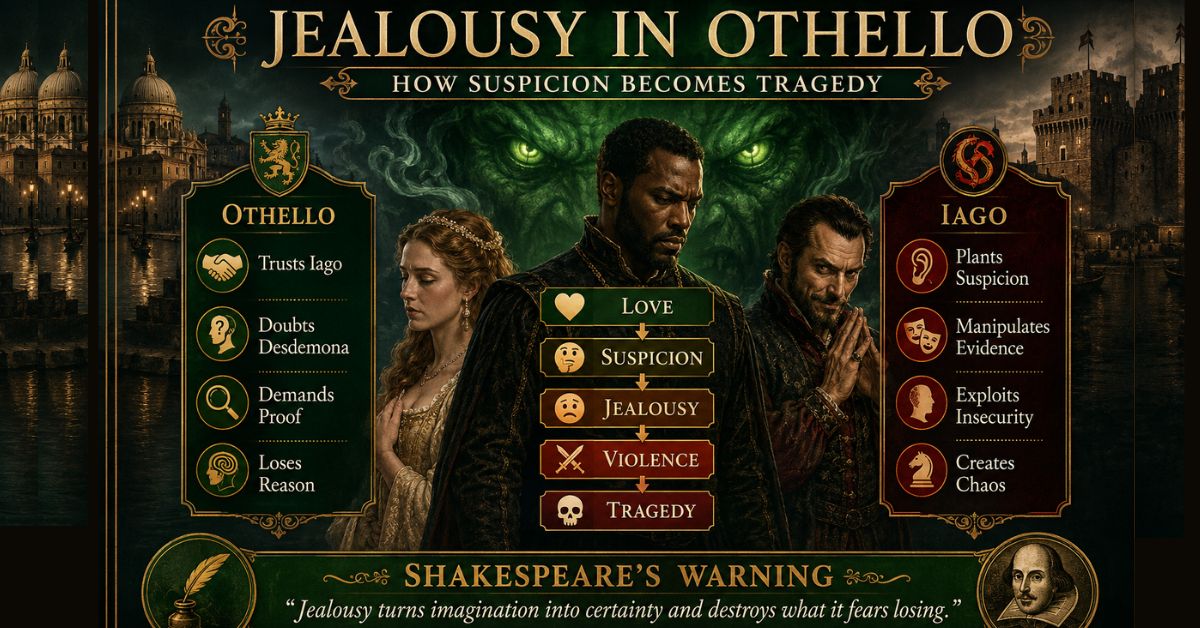
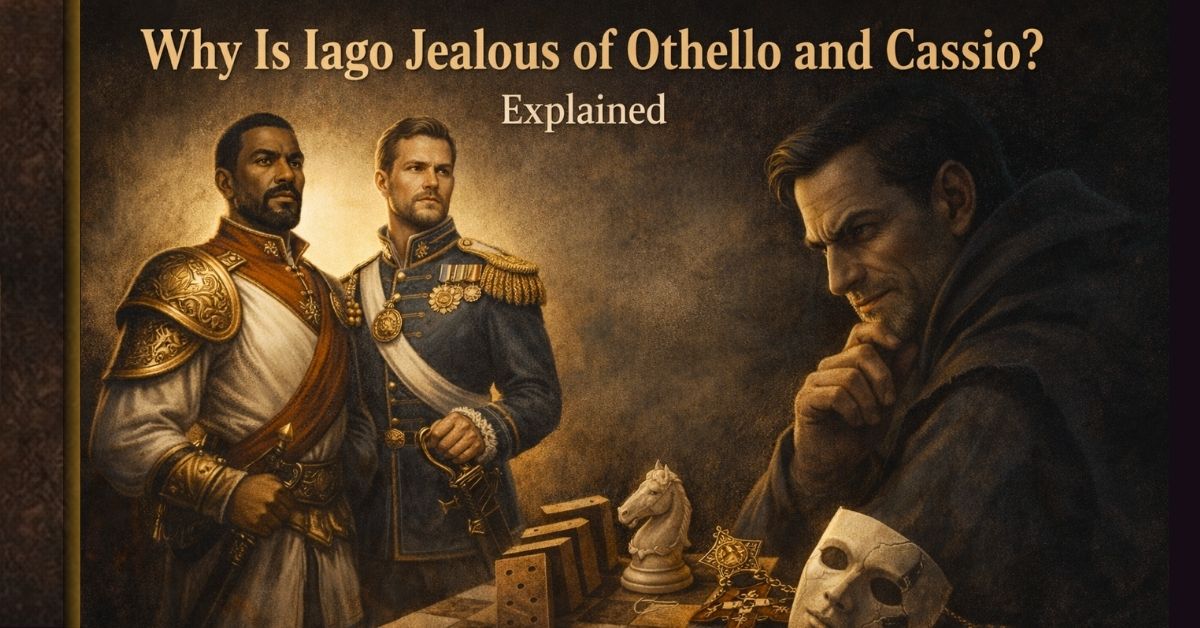
When my students first meet Montano in Othello, they usually squint at the page and ask, “Wait, who is this guy?” And I smile, because Montano is one of Shakespeare’s quiet surprises. He’s a minor character, yes, but an important one. Blink, and you’ll miss him.
Watch closely, though, and you’ll see how his injury in the Cassio brawl changes everything. Montano doesn’t dominate scenes or deliver grand speeches, but his presence and sudden vulnerability force us to notice what happens when steady authority is pulled into disorder.
By the end of this guide, you’ll clearly understand:
- Who Montano is in Othello
- Why his role matters far more than his stage time
- How his character helps expose the play’s moral collapse
- And what his injury reveals about power, order, and manipulation
If you’ve ever overlooked Montano, this reading will show you exactly why Shakespeare didn’t.
Table of Contents
Who Is Montano in Othello?
If you’re looking for thunder and fireworks, Montano will disappoint you. Montano enters Othello quietly, steady before the storm hits. He doesn’t announce himself with drama, but his position alone tells us he matters.
i) Montano’s Position Before Othello Arrives:
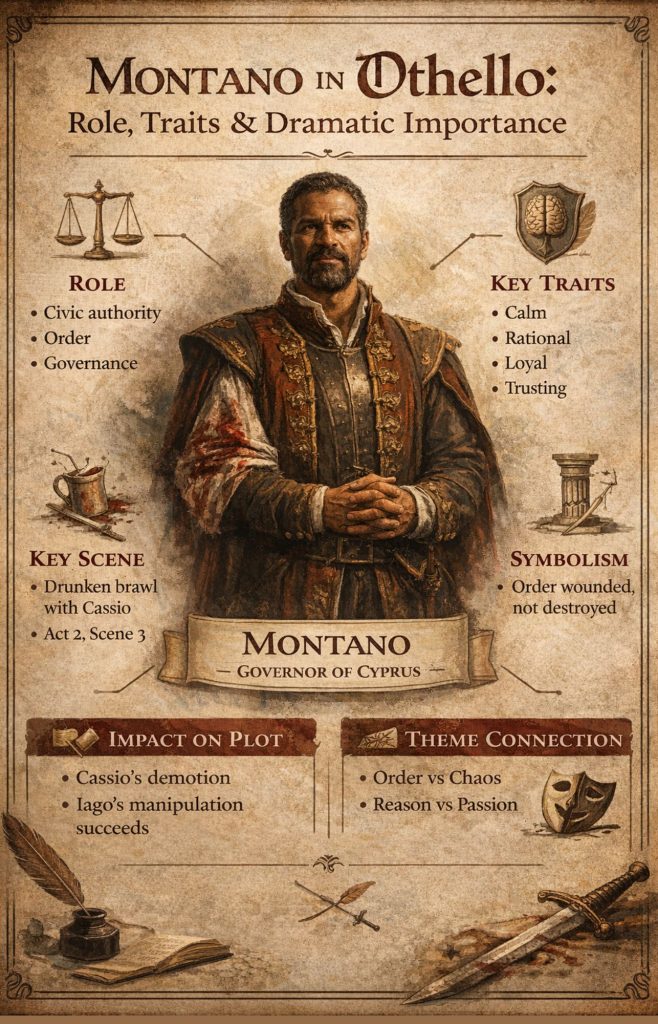
Here’s what I tell my students: before Othello ever sets foot in Cyprus, Montano is already in charge. He is the Governor of Cyprus, trusted by Venice to manage a tense military frontier. That alone tells us a great deal.
Venice doesn’t hand out authority casually. Montano has earned his position through reliability, not bravado. He governs without spectacle- no speeches, no posturing. Just competent in doing its job.
ii) Loyal to Venice, Not to Drama:
One of Montano’s defining qualities is his loyalty to Venetian authority. He respects the chain of command, the law, and reputation. In a play full of emotional extremes, Montano is refreshingly restrained, and I mean that as praise.
He believes people are generally honest, which makes him decent, but also exposes him in a world where manipulation thrives.
iii) A Calm, Respectable Presence (Not a Villain):
Let’s be absolutely clear for exams and essays: Montano is not a villain, schemer, or manipulator. He doesn’t plot, provoke, or perform. His role here is simpler and more important. He exists to be trusted before trust becomes dangerous.
Montano in Othello Act 2: His First Appearance
Montano doesn’t burst onto the stage in Act 2. He listens his way in. While Cyprus braces itself during the storm, Montano appears as a steady presence, responding to danger not with panic, but with composed attention and careful concern.
i) Arrival in the Storm: Calm Amid Chaos
Act 2 opens with thunder, wrecked ships, and anxious waiting. It’s cinematic, and right into this noise steps Montano. What does Montano do in Othello here?
He watches. He asks questions. He worries. While others speculate wildly, Montano focuses on one thing: Has Othello survived?
As a teacher, I always pause here and tell my class- this is our first clue to Montano’s character. He responds to a crisis the way responsible people do: by gathering facts, not feeding fear.
ii) Concern Without Panic:
Montano’s concern for Othello’s safety is genuine and restrained. He doesn’t dramatize the storm or make himself the hero of the moment.
Instead, his language is measured, respectful, and grounded. In a play that thrives on emotional excess, Montano’s tone feels almost modern- like the one adult in the room during a group meltdown.
iii) Early Bond with Cassio:
We also see Montano’s early trust in Cassio. Their interaction is easy, respectful, and cooperative. Montano takes Cassio at face value, and that trust matters later- because Shakespeare is quietly laying emotional groundwork. When order eventually cracks, we’ll remember how stable things once seemed.
Montano’s Role in Othello: Order in a World of Chaos
When I explain the role of Montano in Othello, I tell my students to stop counting lines and start counting impact. Montano never takes over the spotlight in any scene, but he anchors them. Think of him as the level line in a carpenter’s toolkit: you don’t notice it until everything starts tilting.
i) Order Walking Into Disorder:
Montano functions as a living symbol of order and governance. He isn’t loud about it. He doesn’t lecture. His very presence suggests that rules still exist- even when emotions are trying to set fire to them.
In my classroom, I call him Shakespeare’s “control sample.” When chaos erupts later, Montano helps us measure just how far things have fallen.
ii) A Moral Contrast, Not a Moral Speech:
What makes Montano powerful is that he never claims moral superiority. He simply behaves differently. Against the emotional volatility of the play, his steadiness becomes a quiet rebuke.
This contrast sharpens the tragedy, making disorder feel unnecessary rather than inevitable.
iii) Exposing Cassio, Fueling Iago:
Shakespeare also uses Montano strategically to expose Cassio’s weakness. Cassio isn’t brought down by an enemy, but by circumstance, and Montano happens to be standing in the wrong place at the wrong time.
For Iago, Montano is the perfect chess piece: respected enough to make the fallout serious, innocent enough to be manipulated.
Montano and Cassio: The Drunken Brawl Explained
This is the scene where I tell my students that discipline doesn’t fall with a bang. It slips on spilled wine. One night in Cyprus turns into a lesson on how reputation, once cracked, never looks the same again.
i) Iago Manipulating Montano Against Cassio:
Iago doesn’t provoke Montano openly. He educates him with doubt. Like a clever student pretending to ask an innocent question, he hints that Cassio’s drinking makes him unreliable.
He frames suspicion as responsibility. Montano begins to worry, not because he wants trouble, but because he fears disorder.
ii) Montano’s Initial Hesitation:
Here’s where I pause my class. Montano hesitates. He doesn’t rush toward violence. He questions, observes, and tries to keep things calm.
But hesitation, when mixed with alcohol and pride, becomes dangerous. Staying to “manage” chaos often invites it closer.
iii) Cassio Attacking Montano:
Then comes the turning point. Cassio, drunk and wounded in pride, mistakes concern for insult. Control slips. Swords replace words.
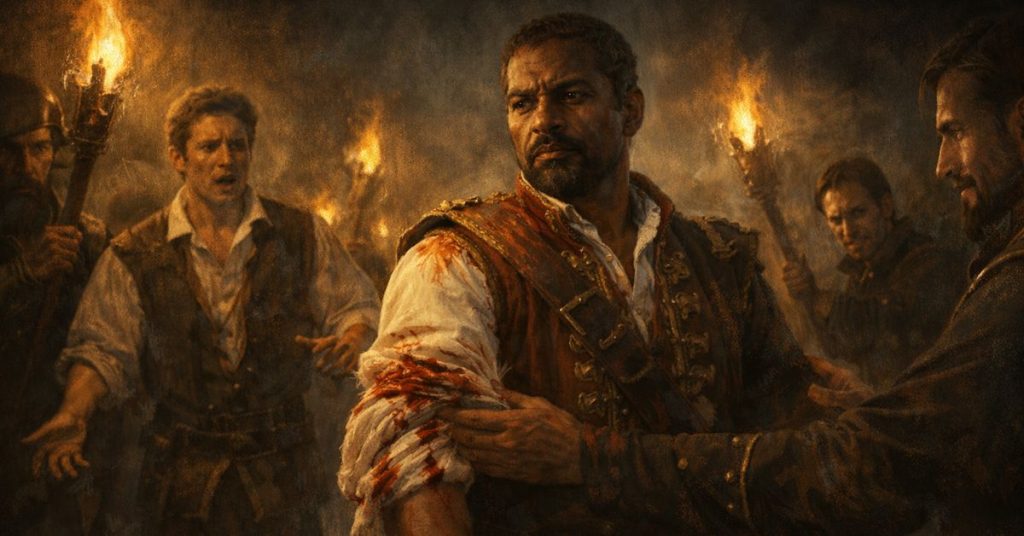
Let me answer the exam question clearly: Cassio wounds Montano. Yes, Cassio attacks and stabs him. Montano is injured, authority is shaken, and the public nature of the violence makes it impossible to ignore.
iv) How This Incident Leads to Cassio’s Demotion:
When Othello arrives, judgment follows swiftly. He doesn’t need speeches. The wounded Montano tells the story. Cassio’s rank collapses under the weight of visible failure.
I remind my students: this scene isn’t about drinking alone. It’s about how one manipulated moment can undo years of honor.
And Iago?
He watches silently, satisfied, as the damage walks itself into history.
Does Montano Die in Othello?
Let me be clear: Montano does NOT die in Othello. He is wounded during the drunken brawl, yes, but he survives. Shakespeare lets him live.
So why the confusion?
Because the scene is loud, bloody, and chaotic. A governor is stabbed, authority collapses, and our brains assume tragedy means death. But Shakespeare is subtler. Montano’s survival matters. His injury is symbolic. It shows order damaged, not destroyed.
I always tell my students: Montano lives, so the consequences can linger. Death ends a story. Survival forces us to sit with the aftermath.
This clarity is exam gold, by the way. If anyone ever asks, “Who killed Montano in Othello?” the answer is simple and firm: No one killed him.
Character Traits of Montano in Othello
Montano is one of those characters my students often overlook- until I ask them to watch how he behaves rather than how much he speaks. He isn’t flashy, but his personal qualities shape every moment he appears in.
i) Calm and Rational:
When everyone else in Othello runs on impulse, Montano pauses. He observes. He thinks. I tell my students that Montano behaves like someone who believes problems can still be solved with reason.
In a play driven by emotional explosions, his calm feels almost rebellious. Shakespeare uses him to show us what rational leadership looks like before chaos overwhelms it.
ii) Loyal to Venetian Law:
Montano trusts systems. He believes in Venetian law, hierarchy, and justice- and honestly, that makes sense. Order, to him, isn’t optional. It’s the foundation of society.
But Cyprus isn’t Venice. The rules exist, yet the emotional climate ignores them. Here, Shakespeare exposes how law weakens once chaos gains momentum.
iii) Trusting (a Flaw Iago Exploits):
This is where Montano’s goodness becomes dangerous. He listens to Iago because he assumes honesty.
I pause here in class and remind students: trust is necessary for order- but it’s also exploitable. Iago doesn’t force Montano into error. Montano walks there willingly, guided by faith in others.
iv) Responsible Leader:
Montano leads through duty, not ego. He tries to protect stability, but Shakespeare makes the point clear: in Othello, responsible leadership isn’t enough to stop chaos once it’s unleashed.
What Does Montano Represent in Othello? (Significance)
Montano may speak little, but Shakespeare uses him deliberately. He represents civic order, political stability, and reason. Through him, we measure how far Cyprus and its people fall into chaos.
i) Montano as Civic Order and Political Stability:
When I introduce Montano, I tell my students to imagine him as the spine of the state- upright, reliable, and rarely noticed unless it breaks. Montano represents civic order: the belief that society functions when people act responsibly within clear structures.
As a supporting character, he embodies what Venice stands for- law, restraint, and public duty- imported into Cyprus like fragile glassware. He doesn’t create conflict. He manages it. That matters.
Shakespeare places him onstage to show us what should be happening while everything else goes wrong. Political stability, the play reminds us, is maintained quietly, through reasoned action.
ii) Reason Before Passion, and the Cost of Losing It:
Montano consistently chooses reason over emotion, and that choice becomes symbolic. In a world ruled by passion, he is the last voice of moderation. His injury is not just physical; it marks a social fracture.
Once Montano falls, rational authority falls with him. Shakespeare includes him, so we feel the loss of order rather than simply observe it. His limited dialogue mirrors his function: not to dominate the story, but to measure how completely chaos takes over once reason is silenced.
Important Montano Quotes in Othello
Montano doesn’t get long speeches, but that’s the point. His brief lines work like pressure gauges- each one quietly measuring judgment, values, and the slow collapse of order in a world slipping toward chaos.
i) “I am sorry that I am deceived in him.”- Act 2, Scene 3
This line is Montano’s moral alarm bell. When I pause on this in class, I tell my students: this is what honest disappointment sounds like. Montano’s judgment is careful, not cruel. He doesn’t rush to condemn. He regrets. That sorrow reveals his values- fairness, trust, and emotional restraint. Plot-wise, this moment shows how easily good judgment can be manipulated, and how chaos advances when reasonable people doubt themselves instead of questioning the liar.
ii) “Is he often thus?”- Act 2, Scene 3
I love this line because it’s Montano thinking out loud. He observes before accusing. As a teacher, I point out how rare that is in Othello. His judgment is investigative, rooted in responsibility. He wants facts, not drama. This question moves the plot forward by opening the door for Iago’s lies, proving Montano’s role as the rational man whose reason is slowly being misdirected.
iii) “’Tis a pity of him.”- Act 2, Scene 3
This short line carries enormous weight. Montano values compassion over condemnation. I tell my students: This is leadership with a conscience. He sees weakness and responds with concern, not superiority. But in the plot, pity becomes dangerous. Shakespeare shows us that empathy, when exploited, can destabilize order just as effectively as anger.
iv) “I fear the trust Othello puts him in.”- Act 2, Scene 3
Here, Montano’s judgment is sharp and tragically late. He senses imbalance, not malice. His values push him to worry about systems, not personal betrayal. This line nudges the plot by signaling that something is wrong beneath the surface, even if Montano can’t yet name it. Order senses chaos approaching, but doesn’t know how to stop it.
v) “I have been hurt.”- Act 2, Scene 3
This line is plain and factual, and that’s exactly why it matters. Montano isn’t interpreting his injury. He’s reporting it. In class, I remind my students that this moment makes the brawl undeniable. A public figure has been wounded, and visible damage demands immediate judgment. From here, authority shifts, decisions accelerate, and Othello can no longer ignore what has happened.
FAQs:
What is Montano’s attitude towards Othello?
In class, I describe Montano’s attitude as respectful but measured. He trusts Othello’s authority and reputation, yet he quietly evaluates actions, believing leadership should be judged by conduct, not titles alone.
How old is Montano in Othello?
Shakespeare never gives Montano an age, which I remind students is intentional. He reads as mature and experienced- old enough to value restraint, young enough to still believe order can prevail.
What is Montano’s position in Othello?
Montano is the governor of Cyprus. I tell my students to picture him as institutional memory- the man who knows how things should run, even as he watches control slip from his hands.
Is Montano a Major Character in Othello?
Montano isn’t a major character by stage time, but he’s major by function. He operates like a moral barometer, helping us measure how far the play drifts from reason into chaos.
How Is Montano Different from Lodovico?
Here’s my classroom shorthand: Montano acts within the storm. Lodovico in Othello arrives to assess the damage. Montano represents local order under pressure, while Lodovico represents external judgment arriving too late.
Why did Cassio fight Montano?
I explain this as chaos fueled by manipulation and alcohol. Cassio loses control, Montano intervenes, and order collapses. The fight matters because it shows how quickly discipline crumbles once judgment slips.
Why Montano Matters in Othello (Final Thoughts)
When my students ask why Montano matters, I smile- because that question means Shakespeare’s trap has worked. Montano isn’t a mover of plots. He’s a measure of them.
In any serious analysis of Montano in Othello, he stands as a witness to events he never causes and a victim of manipulation rather than malice. He shows us what should happen in a lawful world, and how quickly that expectation collapses under pressure.
What does Montano do in Othello? He observes, judges carefully, and steps in when something feels wrong. That’s exactly why his fall matters. Here’s my teaching insight: tragedies don’t collapse when villains act. They collapse when reasonable people are outmaneuvered.
Montano reminds us that goodness without suspicion can still be undone, and that quiet integrity often suffers first when chaos takes the stage.