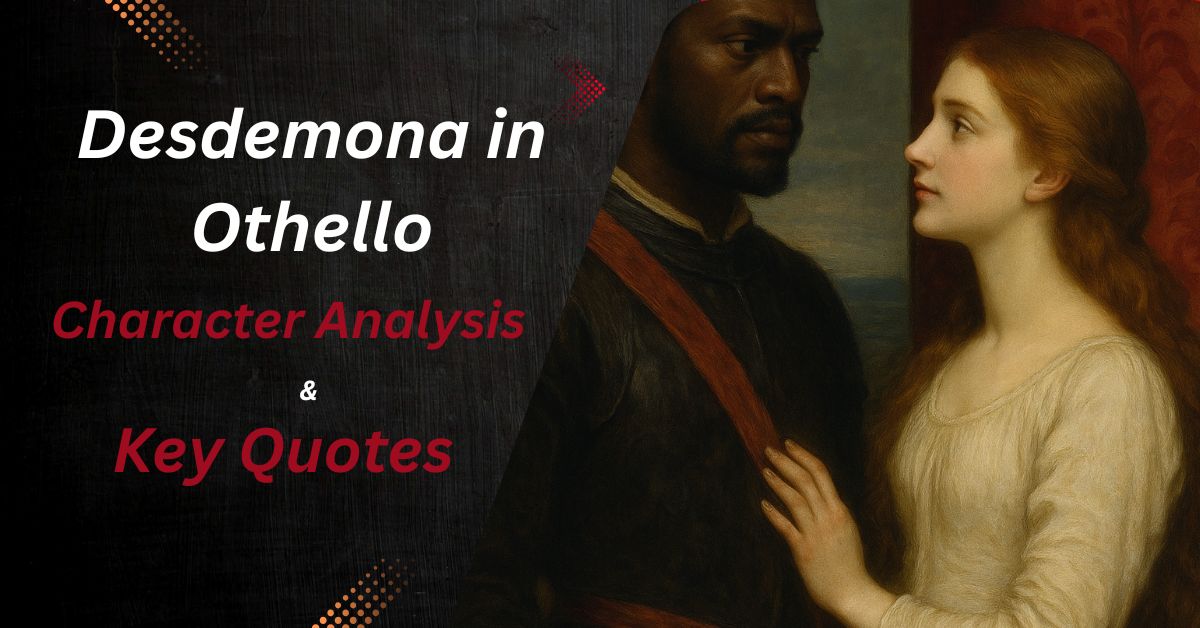
Every time I open Othello in class, I’m reminded why Desdemona in Othello continues to captivate students- soft-spoken, brave, and somehow holding the entire emotional temperature of the play like a human thermometer. I tell my students, “Watch her closely. Shakespeare hides storms inside quiet characters.” And Desdemona? She’s the eye of the hurricane.
In this guide, I’ll walk you through a fresh analysis of Desdemona- her choices, her love, her tragic reputation, and yes, her heartbreaking death.
We’ll explore key quotes, unpick her relationship with Othello, and decode why she still feels so modern. By the end, I hope you’ll see what I see: a woman who refuses to fade, even when the play tries its best to silence her.
Table of Contents
Who Is Desdemona? (Core Identity & Meaning)
Whenever I introduce Desdemona to my students, I joke that Shakespeare handed us one of his most “softly powerful” characters and then whispered, “Good luck figuring her out.” Because honestly, trying to summarise Desdemona in one sentence is like trying to hold water in your palms. She keeps slipping into deeper layers the more you study her.
At her core, Desdemona is Othello’s wife, yes, but reducing her to that alone feels like calling the ocean “a bit of water.” She is the moral compass of the play, the emotional anchor everyone leans on, and the one voice that keeps insisting on love even when every other character is busy sharpening suspicion.
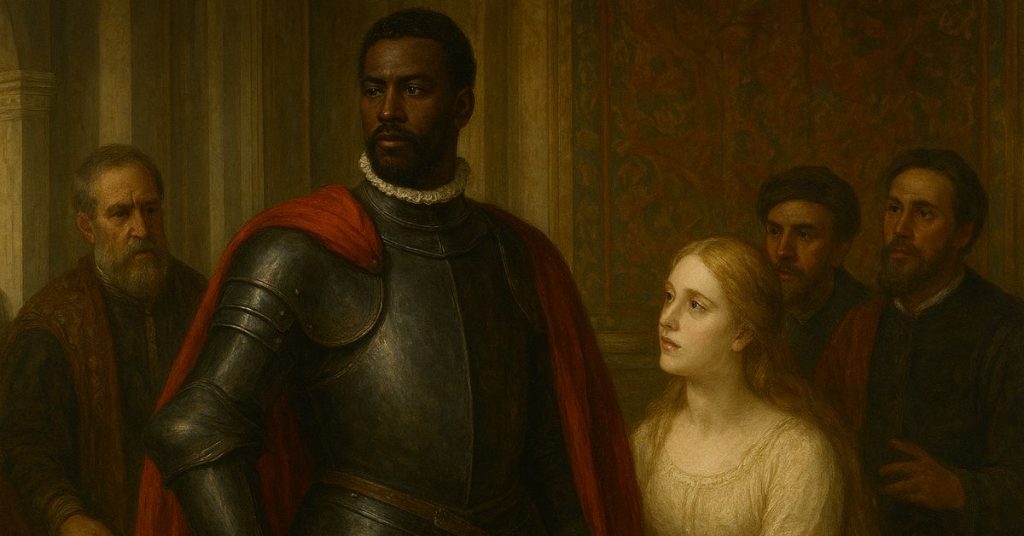
She is quiet, but never weak; gentle, but never passive. I often tell my students, “Look at her choices, not her volume.” And suddenly the whole room goes silent, because Desdemona makes bold choices with the confidence of someone who knows her heart better than the world knows its prejudices.
Even her name carries weight. “Desdemona” comes from the Greek dysdaimon, meaning “ill-fated” or “unlucky.” And I swear, every time I teach this, a few students gasp because it’s the literary equivalent of Shakespeare slipping a spoiler into the title tag.
Yet there’s symbolism, too: she becomes the innocent caught in the storm of other people’s insecurities- Othello’s doubt, Iago’s hatred, Brabantio’s wounded pride.
And that brings us to a question students always ask: Who is Desdemona’s father?
Brabantio, a respected Venetian senator, whose love for his daughter is as fierce as it is flawed. Her background is papered with privilege, dignity, and a father who cherished her deeply… until she dared to love someone he couldn’t understand.
I often call Brabantio “Shakespeare’s prototype for the overprotective dad who forgot to read the empathy manual.” His grief at her elopement isn’t villainous. It’s heartbreak dressed as accusation.
Then comes the age debate. Students assume she must be extremely young, but Shakespeare gives breadcrumbs, not birth certificates. Some imagine her as a sheltered teenager; others see her as a graceful, well-raised young woman with emotional intelligence beyond her years. The text leans toward someone young, but not childish- innocent, but wise enough to choose Othello out of admiration, not rebellion.
So who is Desdemona? She is the play’s quiet force- the character who reminds us that softness isn’t a weakness. It’s a mirror that exposes everyone else’s flaws.
Desdemona’s Character Traits: In-Depth Analysis
Before we dive in, let me warn you: analysing Desdemona is a little like peeling an onion. You uncover layer after layer, sometimes you cry, and sometimes you wonder why Shakespeare insists on making our lives emotionally complicated.
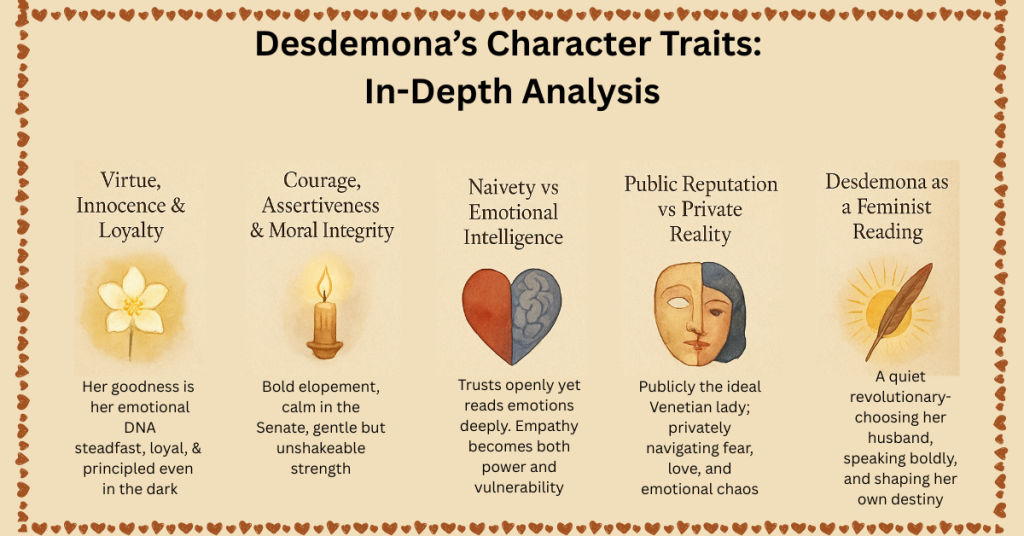
In this section, we’re going to explore the five major dimensions of her character:
- Her quiet virtue
- Her brave assertiveness
- Her complicated mix of naivety and emotional intelligence
- The contrast between her public reputation and her private reality
- And finally, her surprising power as a feminist reading
i) Virtue, Innocence & Loyalty:
Whenever we discuss Desdemona’s virtue in class, I see two kinds of reactions: one group nods with the certainty of people who just know she’s pure-hearted, and the other group squints as if Shakespeare might have hidden a secret scandal somewhere.
Let me save everyone the suspense. Desdemona’s virtue is not a performance. It’s her emotional DNA.
She embodies innocence not because she is clueless, but because she chooses goodness even when the world grows dark around her. Her loyalty to Othello is almost disarming. Even as his jealousy tightens like a fist around their marriage, she stays faithful- not blindly, but with a stubborn belief in love as something worth fighting for.
When I teach this, I sometimes tell my students, “Desdemona is that friend who stands beside you even when your Wi-Fi, your GPA, and your mental peace all abandon you.”
Her faithfulness isn’t passive. It’s principled. It is the anchor point from which every misunderstanding, every accusation, and ultimately her tragedy, spirals outward.
ii) Courage, Assertiveness & Moral Integrity:
Now this is where students usually raise their eyebrows. “Desdemona? Assertive?”
Oh yes, very much so.
Remember, she elopes with Othello, not in secret rebellion but in full confidence. That decision alone would earn her a gold medal in courage in any Shakespearean Olympics. She stands before the Venetian senate and defends her marriage with a poise that would make seasoned politicians jealous.
Her assertiveness is gentle but unmistakable- like a candle that refuses to go out even when the wind blows harder. This is where her moral integrity shines. She speaks when something is wrong, advocates for Cassio with sincerity, and refuses to sink into bitterness even when Othello turns cold.
When I point this out in class, students have that “Ahh” moment where they realise Desdemona is not meek. She is steady.
iii) Naivety vs Emotional Intelligence:
Ah, the eternal debate:
Is Desdemona naïve, or is she emotionally intelligent in a world that punishes compassion?
Honestly, it’s both.
On the one hand, she shows a certain naivety- especially in failing to detect Iago’s manipulation or Othello’s growing storm. She trusts easily, loves openly, and assumes others operate from the same moral clarity she does.
But don’t mistake this for foolishness. Her emotional intelligence is one of the most sophisticated in the play. She reads Othello’s moods, soothes tension, and offers comfort where others stir conflict. It is her empathy- not her ignorance- that guides her.
I often explain to my students that Desdemona’s naivety is not a flaw. It’s a contrast. It highlights how a pure heart can be tragically mismatched with a corrupt environment. Her goodness becomes her vulnerability, not because it is weak, but because it is rare.
iv) Public Reputation vs Private Truth:
In Venice, Desdemona’s reputation shines like gold. She is admired, respected, and held up as the model of virtue. But Shakespeare invites us to look beyond the public packaging and see her private truth.
Behind the polite smiles and noble upbringing, Desdemona is a young woman navigating love, fear, and impossible emotional terrain. Her public image says “perfect Venetian lady,” but her private reality is far more human- someone who questions, feels deeply, and tries her best to hold her marriage together even as it collapses around her.
This contrast becomes painfully clear the moment Othello doubts her. Her public reputation remains spotless, yet her private world shatters. I always tell my students, “Desdemona is the character who loses everything without ever losing herself.”
v) Desdemona as a Feminist Reading:
Now this is my favourite part of the lesson, because modern readers often assume Desdemona is too gentle to be feminist. But if you look again, really look, she is a quiet revolutionary.
She chooses her own husband. She speaks boldly in public spaces. She challenges patriarchal expectations with grace instead of rebellion. Even in her final moments, she refuses to let hatred define her story.
Her strength isn’t loud. It’s luminous.
Desdemona shows us that feminism isn’t always about volume. Sometimes, it’s about certainty. The certainty that you deserve love, autonomy, respect, and the freedom to make your own choices.
And that, to me, makes her one of Shakespeare’s most quietly radical women.
Desdemona Character Analysis (Academic Lens)
Before we jump into the deep, academic waters, let me warn you: analysing Desdemona through a scholarly lens is like adjusting a microscope. You keep discovering details you didn’t know existed.
In this section, we’ll explore:
- How Shakespeare presents her
- How others describe her
- What dramatic purpose does she serve
- How she is studied in A-Level and university classrooms
- And ultimately, why she matters so much to the tragedy of Othello
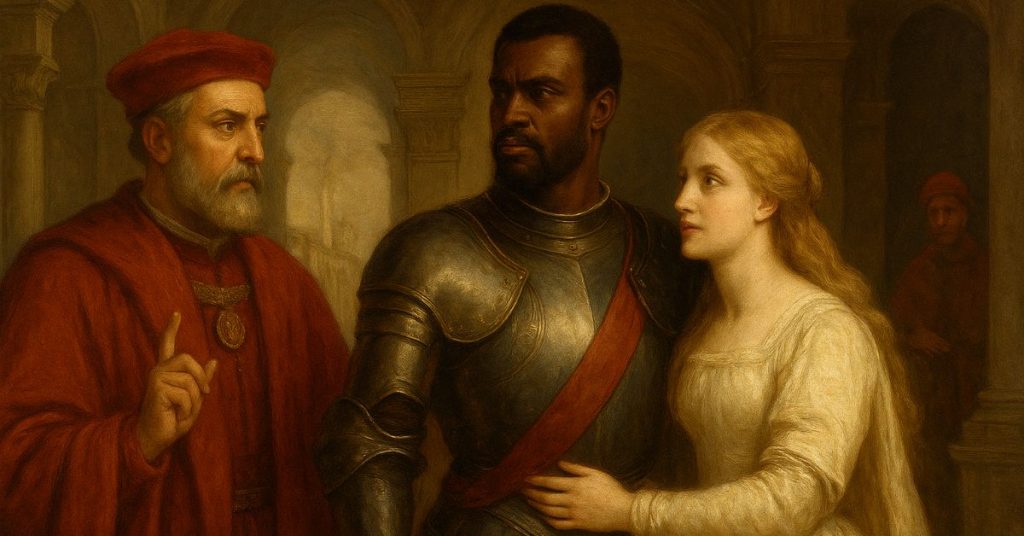
i) How Shakespeare Presents Her:
Shakespeare introduces Desdemona with an interesting trick: he lets everyone else talk about her before we actually see her. It’s almost cinematic- like the camera lingering on reactions before revealing the main character. When she finally appears, we realise she’s nothing like the anxious, rebellious, or fragile figure others imagine.
Shakespeare presents her as a steady light in a world addicted to shadows. She is compassionate without being sentimental, bold without shouting, and loving without losing her independent voice.
I often say to my students, “Shakespeare didn’t design Desdemona to be exciting. He designed her to be essential.” She becomes the emotional fulcrum on which the tragedy tilts.
Her first scene in the Senate is a masterclass in Shakespearean character-building. She isn’t frightened. She doesn’t hide behind Othello. She speaks for herself- clearly, calmly, and without apology.
It’s one of those moments where students look up from the text and go, “Wait, Desdemona is a powerhouse?” Yes, she is, and Shakespeare knew exactly what he was doing.
ii) How Other Characters Describe Her (How does Cassio describe Desdemona?)
One of the joys of teaching Desdemona is watching how differently people interpret her. Brabantio sees her as a stolen jewel. Othello sees her as a miracle of grace. Iago paints her as a cunning temptress.
And how does Cassio describe Desdemona?
With the kind of reverence you reserve for someone who restores your faith in humanity. He sees her as an angelic advocate, a woman whose goodness feels almost luminous.
These descriptions tell us more about the speakers than about Desdemona herself.
Shakespeare uses these voices as emotional mirrors. Brabantio’s grief reveals the cost of her independence. Othello’s admiration and later suspicion show how love can bruise. Iago’s slander exposes the misogyny simmering beneath Venetian politeness. Cassio’s respect highlights her dignity and warmth.
It’s as though Desdemona is a prism: everyone sees a different colour, depending on where they stand.
iii) Desdemona’s Dramatic Purpose:
Let’s be honest: without Desdemona, Othello would collapse like a badly built stage set.
She is the catalyst for the central conflict. Her marriage sets the plot in motion. Her goodness becomes the contrast that exposes Othello’s tragic flaws. Her vulnerability heightens the play’s emotional stakes. And ultimately, her death marks the point where tragedy becomes unavoidable.
But here’s what I say to my students: Desdemona’s dramatic purpose is not to die. It’s to reveal.
She reveals the dangers of jealousy, the brutality of patriarchy, the fragility of trust, and the terrifying speed with which a lie can rot a life.
iv) A-Level & University Perspectives:
Academic readings are often split into two camps:
Camp 1: Desdemona as a victim- innocent, pure, and tragically powerless.
Camp 2: Desdemona as quietly rebellious- a woman who chooses her husband, speaks for justice, and shapes her destiny.
In A-Level classes, the focus is usually on her virtue, vulnerability, and symbolic role. At the university level, students explore her agency, how gender expectations frame her silence, and how race influences her treatment.
I love watching students shift perspectives as their analytical lenses sharpen.
v) Her Significance in the Tragedy:
Desdemona isn’t just significant. She’s the emotional heart that makes the tragedy hurt. Without her goodness, Othello’s fall wouldn’t feel tragic. It would feel like poetic justice. Instead, her death turns the play into a moral earthquake.
She represents what is lost when envy wins.
She reminds us of the fragility of love in a world full of manipulation. And she stands as Shakespeare’s quiet warning: goodness alone cannot survive unchecked jealousy.
In the end, Desdemona is the tragedy’s truth-teller, not with speeches, but with her life.
Desdemona in the Play: Act-by-Act Evolution
Before we walk through Desdemona’s journey act by act, let me tell you this: tracking her evolution is like watching a candle glow steadily while the room around it slowly fills with shadows. Each act reveals a new facet of her heart- her courage, her warmth, her vulnerability, and her heartbreaking resilience.
In this section, we’re going to explore Desdemona’s bold elopement, her diplomacy, the tragic misinterpretations that trap her, the emotional pressure she faces, and finally, her devastating end.
Act 1: Desdemona’s Bold Elopement & Defence Before the Senate
Act 1 is Desdemona’s dramatic entrance into the world of tragedy, and she walks in with surprising confidence. I always tell my students, “If you think Desdemona is timid, read Act 1 again.”
Her elopement with Othello is not a rash teenage meltdown. It’s a choice built on admiration, respect, and emotional clarity.
And yes, it scandalises Venice. Brabantio storms into the Senate like a man who’s misplaced both his daughter and his worldview. But then Shakespeare does something brilliant: he lets Desdemona speak.
Her Senate speech is one of my favourite teaching moments. She stands before the most powerful men in Venice and explains her love- not hysterically, not defensively, but with calm, poised logic. It’s the first sign that Desdemona is stronger than the patriarchy assumes.
Act 2: Her Warmth, Diplomacy & Cassio Advocacy
By Act 2, we see Desdemona in her element. When she arrives in Cyprus, she settles conflicts with the same ease some of us use to settle group-chat arguments. Her warmth becomes a kind of social glue. She calms Othello, lifts the mood, and instantly becomes the emotional centre of the island.
Her advocacy for Cassio is often misunderstood by students. “Why is she so invested?” they ask.
Because Desdemona is a natural diplomat, she sees Cassio’s disgrace as an injustice and tries to fix it the way empathetic people do, by simply asking for fairness.
Of course, this goodwill becomes the raw material for Iago’s lies. Tragic irony: Desdemona’s kindness becomes her vulnerability.
Act 3: Misinterpretation, Vulnerability & Rising Tension
Act 3 is where my students lean forward in their chairs. Everything Desdemona does from this point is filtered through Othello’s clouded perspective.
She continues advocating for Cassio with genuine innocence, unaware that Othello is reading her kindness as infidelity. This act is painful to teach because Desdemona tries harder as she senses Othello’s discomfort, but every effort becomes twisted by jealousy.
The handkerchief scene is a masterclass in misunderstanding. Desdemona’s vulnerability becomes painfully visible. She doesn’t know why Othello is angry, but she keeps trying to bridge the emotional gap anyway. Watching her navigate this tension feels like watching someone trying to fix a sinking boat using a teacup.
Act 4: Emotional Devastation & Loyalty Under Pressure
Act 4 is where Desdemona’s emotional world collapses. Othello’s anger becomes explicit, public, and brutal. When he strikes her, she is stunned, not because she fears him, but because she still believes the love between them can be repaired.
This is where Desdemona’s loyalty shines with heartbreaking clarity. She blames herself, not out of weakness, but out of emotional logic. She cannot imagine that someone she loves so deeply could be misled by lies.
Her conversation with Emilia in this act always moves me. She wonders whether any woman could ever betray her husband. It’s a moment of innocence so raw it breaks the classroom silence.
Students understand here: Desdemona’s tragedy is not only external. It is internal, built on her inability to fathom cruelty.
Act 5: Her Death, Final Lines & Tragic Impact
Act 5 is the emotional earthquake of the play. Desdemona’s death is staged like a cruel ritual: intimate, suffocating, undeserved. Her final moments reveal the essence of her character more than any speech.
When Emilia asks who has killed her, Desdemona replies, “Nobody; I myself.” I always pause here in class because Shakespeare hands us a line that echoes across centuries.
Desdemona is still protecting Othello. Still loving. Still loyal. Even when love has destroyed her.
Her death is the moment the tragedy sharpens into its cruelest point. She becomes the play’s moral centre because, in losing her, the audience feels the cost of jealousy, manipulation, and blind trust.
Shakespeare ends her life, but he doesn’t silence her. Her innocence becomes the weight that Othello cannot bear, the truth that Emilia exposes, and the emotional lesson the audience carries long after the curtain falls.
Desdemona’s evolution is tragic, yes, but it is also luminous. She remains, throughout the play, the soft light standing against the gathering darkness.
Relationship Guide: Othello & Desdemona
Whenever I teach Othello, I explain to my students: if you want to understand the tragedy, start with the love story. Not the jealousy, not the murder, not the infamous handkerchief- the love story.
Because in this section, we’re going to unpack the heart of the play:
- Why Desdemona fell in love with Othello
- How he won her over
- How their marriage works
- How trust breaks down
- How jealousy enters the room like an uninvited guest
- And yes, why Cassio becomes the innocent spark in this emotional explosion

i) Why Desdemona Fell in Love with Othello?
Desdemona’s love wasn’t impulsive or rebellious. It was deeply emotional. I always describe it to students using this metaphor: Desdemona fell in love the way people fall into stories- slowly, unexpectedly, and then all at once.
She listened to Othello talk about his life, his battles, his escapes from danger, and his childhood struggles. Through those stories, she saw not a warrior, but a man who had survived enough pain for ten lifetimes and yet still carried himself with dignity.
What attracted her wasn’t his power. It was his vulnerability. And her compassion became the root of her affection.
ii) How Othello Wooed Her?
Now, when students ask me “How did Othello win Desdemona’s love?” I tell them he didn’t rely on cheesy poems, moonlit serenades, or late-night “u up?” whispered through the window.
Instead, he wooed her with stories- rich, emotional, breathtaking stories that opened the door to his inner world.
I always tell my class: “Othello won Desdemona by being emotionally honest, not romantically flashy.” His tales weren’t performances. They were confessions.
And Desdemona responded with empathy, not infatuation. Their bond wasn’t built on attraction alone. It was built on storytelling, which might just be the most Shakespearean kind of love.
iii) Their Marriage Dynamic
Their marriage begins with genuine harmony. Desdemona respects Othello’s leadership, and Othello admires Desdemona’s fairness and strength. There’s tenderness, mutual admiration, and a sense of partnership.
But here’s the heartbreaking twist I always highlight: they love each other deeply, but they communicate differently. Desdemona speaks with gentle assertiveness. Othello listens through emotional intensity. Their marriage isn’t fragile, but it becomes fragile under pressure.
iv) Trust, Misunderstanding & Jealousy
This is where everything begins to unravel. Trust is the oxygen of their marriage, and Iago slowly suffocates it.
Desdemona assumes Othello’s trust is unshakeable. Othello assumes Desdemona’s goodness is too good to be true. And Iago, well, he’s the puppet master who turns every innocent gesture into “evidence.”
The tragedy is that Desdemona does nothing wrong, yet the more she tries to help Cassio, the more Othello misreads her. It’s a perfect storm of misinterpretation, where jealousy becomes the invisible third person in the marriage.
v) How Their Relationship Drives the Tragedy
Desdemona and Othello are both strong, but their love becomes the battlefield on which Iago fights his war. Their relationship fuels the entire plot. Othello’s trust is the domino Iago pushes. Desdemona’s innocence is the domino Othello cannot see. Once suspicion enters the marriage, the tragedy accelerates like a downhill cart with no brakes.
Their relationship doesn’t just experience the tragedy; it creates the tragedy. The fall of their love is the fall of the play.
vi) Cassio’s Role in Othello’s Suspicion
Ah, poor Cassio, the man who gets caught in a love story he didn’t even know he was in.
Cassio is polite, respectful, and genuinely fond of Desdemona in a brotherly way. But Iago weaponises this friendliness, turning it into “proof.” Cassio becomes the mirror that distorts Othello’s perspective. His charm becomes ammunition, his innocence becomes a trap, and his association with Desdemona becomes the shaky pillar on which Othello builds his jealousy.
In the end, Cassio’s presence doesn’t damage their marriage. Othello’s insecurity does. And that’s the devastating truth I always leave my students with: the tragedy begins not in Desdemona’s actions, but in Othello’s fear of losing her.
Key Desdemona Quotes (With Explanations)
Before we dive in, let me say this: teaching Desdemona’s quotes always feels like opening a treasure chest. You think you know what’s inside, and suddenly a new emotional gem catches the light.
In this section, we’re going to explore her key quotes, each unpacked with the emotional depth, context, and hidden meanings your students need to understand her character.
Desdemona Love Quotes
Before we dive into the heartbreak and honeyed tenderness of Desdemona’s lines, let me walk you through the moments where her love shines the brightest, and hurts the deepest. These love quotes aren’t just words. They’re emotional fingerprints that reveal who she is, what she feels, and how her love story with Othello transforms into tragedy.
1. “I saw Othello’s visage in his mind.”- Act 1, Scene 3
This is one of those lines that I pause on every time, partly because it’s so beautiful, and partly because students always squint and ask, “What does that even mean, sir?”
Let me break it down. Desdemona is telling the Venetian Senate that she didn’t fall in love with Othello’s appearance. She fell in love with the landscape of his soul. The “visage in his mind” is Shakespeare’s poetic way of saying she saw his inner world- his courage, his pain, his history, his humanity.
This line becomes the heartbeat of their love story. Desdemona teaches us here that true love isn’t about faces. It’s about stories. She loved the man behind the armour long before she saw him as a general.
And when my students hear this, it sparks that wonderful classroom hush, the moment they realise Desdemona wasn’t naive. She was emotionally perceptive in a way most characters in the play are not.
2. “My noble father, / I do perceive here a divided duty.”- Act 1, Scene 3
Ah, the divided duty speech, the first moment Desdemona steps into her own power. I always tell my class that this is Shakespeare’s quiet feminist alarm clock.
In these lines, Desdemona respectfully tells her father that she loves him deeply, but her duty now belongs to her husband. She’s not rejecting Brabantio. She’s redefining loyalty. And she does it without rebellion, anger, or drama- just clarity.
This quote shows Desdemona’s emotional intelligence long before any tragedy unfolds. She navigates patriarchal expectations like someone negotiating peace in a family WhatsApp group. Her voice doesn’t tremble. Her reasoning doesn’t falter. This is Desdemona at her most poised- assertive, compassionate, and startlingly mature.
I use this quote to remind my students that courage doesn’t always shout. Sometimes it speaks softly in a Senate chamber and changes the trajectory of a tragedy.
3. “If I be left behind, / A moth of peace…”- Act 1, Scene 3
This is one of those lines that makes Desdemona leap off the page. She is telling the Senate, and indirectly Othello, that she refuses to be sidelined in her own life. Being “a moth of peace” means she would rather be with her husband in danger than remain safely at home without him.
When I explain this line, I usually say, “This is Desdemona choosing partnership over comfort.” She is not content with a decorative marriage. She wants to share Othello’s world, not admire it from a distance.
And what I love most is the imagery of the moth: delicate yet drawn to the light. Desdemona sees Othello as that light- not a hero in armour, but a man whose presence is worth any risk.
This quote completely resets students’ misconceptions about her being passive. She is, instead, boldly devoted.
4. “His unkindness may defeat my life,/But never taint my love.”- Act 4, Scene 2
This quote hurts every time, and yes, I mean every time. By this point in the play, Desdemona is exhausted, frightened, and deeply confused. And yet, she still holds on to a love that is slipping away from her.
When she says this line, she isn’t excusing abuse. She is expressing the depth of her commitment. Her love is not conditional. It doesn’t shrink in the face of anger. It doesn’t turn bitter. If anything, it becomes more tender.
In class, I call this the “line of impossible loyalty.” Desdemona’s emotional endurance becomes her tragic weapon. She loves too deeply in a world that punishes goodness. And this is also the moment where students feel the full weight of the tragedy: not because she is weak, but because her capacity for love is larger than the cruelty closing in around her.
5. “Nobody; I myself.”- Act 5, Scene 2
This is perhaps Desdemona’s most haunting line. She speaks it moments before dying, when Emilia asks who has killed her. And Desdemona, despite everything, chooses to protect Othello.
I remember a student once whispered, “Why would she lie?”, and that’s the exact question Shakespeare wants us to ask. This line isn’t simple. It’s layered with love, denial, forgiveness, and a final attempt to shield the man she once adored.
In her last breath, Desdemona asserts her agency: she will define her ending, not Othello, not Iago, not the violence around her. And that is why this quote hits like a blow to the chest. The girl who loved Othello’s “visage in his mind” leaves the world still seeing the best in him, even when he has destroyed her.
It remains one of the most devastating moments in Shakespeare, and one of the most morally complex lines his female characters ever speak.
Desdemona Innocence Quotes
Here are three moments I often walk my students through when we explore Desdemona’s innocence, each one a little window into her heart, her values, and her quietly radical courage.
1. “I do perceive here a divided duty.” (Act 1, Scene 3)
If there’s one moment that always makes me pause mid-lesson, it’s this line. Whenever I teach it, I point out my students, “Watch closely- this is Desdemona stepping into womanhood with honesty, grace, and a sprinkle of brave rebellion.”
She stands between father and husband, torn yet truthful, like a young tree caught between two strong winds. And still, she doesn’t break.
Her innocence here isn’t naivety. It’s moral clarity. She isn’t confused about right or wrong. She’s simply acknowledging the weight of love in two directions. When she says she owes Othello her “duty,” she’s rewriting the rules of obedience without raising her voice.
I love teaching this part because it shows that innocence doesn’t mean silence. It can mean the courage to speak gently in a storm. And yes, I always pause dramatically here just to make my students lean in a little closer.
2. “His unkindness may defeat my life, / But never taint my love.” (Act 4, Scene 2)
Every time I read this line aloud, I swear I hear half my classroom gasp. Desdemona’s faith in love is so pure that it feels almost fragile- like holding a soap bubble and hoping it won’t pop. Yet somehow, her innocence gives it strength.
She believes in Othello even when he stops believing in himself. “His unkindness” isn’t just hurtful behavior. It’s the tragedy closing in on her. And still, she refuses to let her love sour. I like to tell my students, “This isn’t foolish devotion. It’s a terrifying level of emotional courage.”
In this moment, Desdemona becomes the moral heartbeat of the play. She loves without bitterness, forgives without being asked, and stands in front of a darkness she can’t see, hoping her light is bright enough. It’s innocence, yes, but the kind that aches to witness.
3. “Good friend, go to him; for, by this light of heaven, / I know not how I lost him.” (Act 4, Scene 2)
This line is one of my favorite Desdemona moments to teach because it feels like she’s thinking out loud- her voice trembling between hope and despair. I look at my students and say, “Here she is, trying to solve the mystery of her own heartbreak like she’s been handed a puzzle with missing pieces.”
She confides in Emilia, searching for answers as if love were a math equation she could balance if only she tried harder. The phrase “I know not how I lost him” reveals the tragedy before the tragedy. She hasn’t lost Othello physically. She’s lost the version of him who trusted her, loved her openly, and believed in her truth.
In class, I compare it to watching someone reach out for a hand that isn’t there anymore. It sparks curiosity because it’s the moment students truly feel her slipping into emotional freefall, and realize the tragedy is no longer on the horizon. It’s already inside the room.
3. “Am I that name, Iago?” (Act 4, Scene 2)
Whenever I arrive at this moment in class, I slow down, almost whispering the line. It feels like a monologue of heartbreak- a moment where Desdemona turns inward, questioning herself in the face of Othello’s fury. I tell my students, “This is the sound of innocence being forced to defend itself against accusations it can’t understand.”
She’s bewildered, wounded, and starting to sense that love might not shield her anymore. Her voice cracks open with vulnerability as she wonders if she has somehow become the person Othello thinks she is. That internal implosion, that quiet self-doubt, hits harder than any shouted speech.
In class, I describe the moment as standing in front of a mirror and not recognizing the reflection. Desdemona’s world is unraveling, and in this monologue-like plea, she reaches for reassurance- from Iago of all people.
And every time my students realize the bitter irony, I see their faces change. That’s the power of Shakespeare’s emotional precision: one simple question becomes a whole tragedy’s heartbeat.
Desdemona Loyalty Quotes
Here are a few moments I love bringing to life for my students, each one showing Desdemona’s fierce, unwavering loyalty, even when the world around her crumbles.
1. “If I do vow a friendship, I’ll perform it / To the last article.” (Act 3, Scene 4)
Whenever I teach this line, I can practically feel Desdemona tapping my shoulder and saying, “Tell them I mean what I say.” And she does. Her loyalty isn’t a quiet, whispered virtue. It’s a full-bodied promise wrapped in velvet.
In this moment, she’s defending Cassio, insisting that her word is not flimsy like courtroom paper but firm as bedrock. I love telling my students, “This is Shakespeare’s way of showing a woman whose integrity doesn’t bend- even when the plot is twisting like a soap opera on fast-forward.”
Her loyalty here is proactive: she steps in, speaks up, and stands firmly, even though she has no idea she’s walking straight into Iago’s trap. And that’s the tragedy: her goodness becomes the very thread Iago weaponizes. Still, she refuses to abandon her vow. That’s loyalty with a brave heartbeat.
2. “I’ll intermingle every thing he does / With Cassio’s suit.” (Act 3, Scene 3)
Every time I read this line, I imagine Desdemona rolling up her sleeves like a determined student activist: “I’m going to talk about Cassio until Othello gives in.” It’s loyalty served with kindness and just a dash of stubborn charm.
I remind my students, “Watch how her loyalty isn’t loud- but it’s relentless.” She believes Cassio deserves his place back, and she’s willing to bring his case into every conversation, as if sliding it under Othello’s door again and again. Not nagging, just faithfully persistent.
Her loyalty here blooms from empathy: Cassio’s fall from grace hurts her because she knows it wasn’t deserved. She wants justice for him, not because it benefits her, but because loyalty, in her world, is an active verb.
And ironically, in trying to restore Cassio’s honor, she unknowingly sparks Othello’s downfall. Loyalty meets tragedy, Shakespeare’s favorite cocktail.
3. “Let him come when he will; I will deny thee nothing.” (Act 3, Scene 3)
This line always makes my students sit up straighter- mostly because they realize Desdemona is promising Othello anything he needs, with the sincerity of someone offering the last piece of chocolate cake. Her loyalty to Othello is instinctive and unconditional.
I always remind my class, “This is Desdemona’s heart speaking before her head even gets the memo.” She believes so fully in their love that denying him anything feels impossible. It’s loyalty wrapped in tenderness- the kind that makes you root for her even as the tragedy looms like a storm cloud on the horizon.
What fascinates me most is how this loyalty becomes her blind spot. She doesn’t imagine her love could be twisted into suspicion. She simply trusts.
And in teaching this, I watch the room fall quiet- because her sincerity is beautiful, heartbreaking, and utterly vulnerable. Desdemona gives everything, expecting nothing but understanding in return.
4. “I will do / All my abilities in thy behalf.” (Act 3, Scene 3)
This moment feels like Desdemona giving herself a quiet pep talk, and I always highlight it as one of her unofficial monologues- the kind spoken with action as much as words.
When she promises Cassio her full support, she’s doing much more than making a polite social gesture. She’s stepping into the role of advocate, believing her influence and kindness can repair something broken.
In class, I share with my students, “This is Desdemona seeing someone else’s storm and handing them an umbrella without being asked.” Her commitment is earnest, almost disarmingly so. She’s convinced that goodness is contagious, and she’s determined to spread it.
Of course, we know she’s unintentionally stepping into Iago’s trap, and that irony hits hard. But that’s what makes this moment so meaningful: Desdemona acts from pure-hearted conviction, unaware that her compassion will become the spark that ignites tragedy. A heart like hers makes literature worth teaching.
Desdemona Death Quotes
Here are three heartbreaking moments I often unpack with my students- scenes where Desdemona’s final words become quiet lanterns in the darkness of the play.
1. “Commend me to my kind lord. O, farewell!” (Act 5, Scene 2)
Every time I read these words aloud in class, I feel the room shift. Students stop scribbling, the air gets heavier, and for a second, Shakespeare feels painfully present. Desdemona’s final “commend me” is her way of sending one last love note into a world already closing around her.
I tell my students, “This is not a woman clinging to life. It’s a woman clinging to love.” Even in her dying breath, she refuses to let bitterness stain her loyalty. It’s like she’s holding the shattered pieces of her marriage and still trying to polish them for Othello’s sake.
What grips me most is how gentle she remains in a moment where anger would have been justified. Her farewell is soft, almost whispered, like a candle going out but refusing to flicker in fear.
In teaching this, I always pause, because it reminds us that Desdemona’s strength is quiet, but unforgettable.
2. “O Lord, Lord, Lord!” (Act 5, Scene 2)
This cry – raw, instinctive, and painfully human- often catches my students off guard. They expect Desdemona to remain composed, saint-like even, but here her voice cracks open with fear and disbelief.
I note them, “This is the moment Shakespeare lets her humanity ring out louder than her innocence.”
It’s the sound of a woman betrayed by the love she trusted most. To me, this line feels like the emotional thunderclap before the storm fully breaks. It’s brief, but powerful- the kind of line that lingers long after the page is turned.
In class, I compare it to a sudden drop in a heartbeat monitor- that shock when life shifts violently. This cry is Desdemona realizing the tragedy has arrived, and there’s no escape door backstage. Her vulnerability here opens a window into her soul, reminding us she isn’t a symbol. She’s a person, frightened and fighting to hold on.
3. “A guiltless death I die.” (Act 5, Scene 2)
If literature ever had a line that could break a teacher’s voice mid-lesson, it’s this one. I always tell my students, “Listen carefully. This is Desdemona naming her own truth when no one else will.”
Her innocence stands tall even as her life slips away, like a white flag raised not in surrender but in dignity. She wants the world, and Othello, to know she dies without wrongdoing, without betrayal, without the stain others tried to paint on her. It’s one of the most haunting acts of self-advocacy in Shakespeare.
When I teach this moment, I often see students fall into a rare silence- the kind that means the text has reached them. Desdemona isn’t begging, blaming, or bargaining. She’s simply claiming the truth of her story before the world miswrites it.
And in that final declaration, her innocence becomes immortal, echoing long after the curtain falls.
Famous Desdemona Lines
Here are some Desdemona lines I love guiding my students through- each one revealing a different spark of her spirit, her courage, and her heartbreak.
1. “My noble father, I do perceive here a divided duty.” (Act 1, Scene 3)
This is one of those lines I deliver in class with the dramatic pause of a seasoned storyteller- because Desdemona is walking straight into a life-defining moment. When she says this, she isn’t rebelling. She’s reasoning.
And I always tell my students, “Watch how she balances love and loyalty like a tightrope walker without a safety net.”
Here, Desdemona gently reminds her father that she must now follow her husband, just as her mother once followed him. It’s logical, respectful, and quietly revolutionary. She doesn’t shout, slam doors, or drop a Shakespearean mic. She simply speaks her truth with grace.
I love teaching this line because it shows Desdemona’s emotional intelligence long before the tragedy unfolds. It’s her saying, “I choose my path,” with the soft strength of someone who knows love requires courage.
And yes, I always see a few students raise their eyebrows, because innocence with backbone is always a delightful surprise.
2. “I saw Othello’s visage in his mind.” (Act 1, Scene 3)
Whenever I introduce this line, I can’t resist telling my students, “Desdemona invented seeing someone’s soul before their selfies.” She tells the Venetian senators, and us, that she fell in love with Othello’s stories, not his status or appearance.
This line glows with sincerity. She loved the man he showed through courage, vulnerability, and experience. It’s one of the most beautifully romantic declarations in the entire play, but it’s also quietly bold. In a world obsessed with appearances, Desdemona chooses depth.
In class, I describe this moment as her planting a flag of emotional maturity in the middle of a political battlefield. She isn’t ashamed of loving him. She’s proud.
And that pride becomes her compass throughout the play. Students often gasp at the purity of the line, and I can’t blame them. It’s Shakespearean love distilled to its most luminous truth.
3. “That I did love the Moor to live with him.” (Act 1, Scene 3)
I always teach this line with a little theatrical flourish, because Desdemona is standing in front of the Venetian council declaring love with the confidence of someone who refuses to apologize for her heart. It’s bold, honest, and beautifully simple.
She doesn’t weave metaphors or hide behind poetry. She says plainly that she loved Othello enough to choose a life with him, a life that would surely come with challenges, criticism, and whispers behind fans. And yet she stands there, unwavering.
I often tell my students, “This is Desdemona at her most fearless, not in the face of danger, but in the face of judgment.” Her authenticity is disarming. There’s no shame in her voice, no fear of the political thunderclouds gathering around her marriage. Only truth.
And every time I teach it, I can’t help but admire how her courage shines before the tragedy has a chance to dim it.
Desdemona’s Monologue Moments
These are the moments where Desdemona’s voice stretches beyond a single line- where she reveals her heart, her fears, and her fierce sincerity. The kind of lines I love unpacking with my students, like we’re dusting off emotional fossils.
1. “Unkindness may do much, / And his unkindness may defeat my life; / But never taint my love.” (Act 4, Scene 2)
Every time I teach this moment, I feel like Desdemona is stepping into the room with us, whispering her heartbreak directly into our ears. She’s just been accused, insulted, and emotionally crushed, and yet this is what she says.
I often pause and tell my students, “Imagine loving someone so deeply that even their cruelty can’t corrode your devotion.”
Here, Desdemona isn’t being naïve. She’s affirming the core of who she is. Her love is not transactional, not brittle, not frightened into retreat. It’s steadfast.
And yes, it’s tragic. When she says Othello’s unkindness may “defeat” her life, she speaks with the eerie awareness that something dark is moving toward her.
In my classroom, I describe this moment as Desdemona standing in a storm without an umbrella, and still worrying about whether the thunder is cold. It sparks a deep curiosity in students: How can love survive this much pain? And then we dig in, because Shakespeare wrote her heart with both wings and wounds.
2. “Here I kneel: / If e’er my will did trespass ’gainst his love… / Comfort for swear me!” (Act 4, Scene 2)
This moment hits like a punch to the chest. When Desdemona kneels, I always tell my students, “This is her full-blown emotional monologue- a plea, a prayer, and a protest all at once.” She begs Othello to believe her fidelity, offering herself up for judgment with a heartbreaking sincerity.
It’s not just words; it’s performance. A physical declaration. A woman using the last tools she believes she has, honesty and humility, to defend her integrity.
In the classroom, I describe her kneeling as a symbol of her world collapsing, not because she deserves punishment but because she can’t understand why love is suddenly on trial.
What fascinates students is how she speaks like someone pulling open her own chest, showing her heart and saying, “Look- there’s no deceit here.” It’s raw. It’s vulnerable. And it’s one of Shakespeare’s most quietly devastating monologue moments.
3. “That I love the Moor to live with him… my heart’s subdued / Even to the very quality of my lord.” (Act 1, Scene 3)
Whenever I teach this moment, I tell my students, “Listen carefully, this is Desdemona opening her heart like a diary she’s unafraid to read aloud.” She’s in front of the Venetian council, surrounded by political heavyweights, and yet her voice doesn’t shake. That alone deserves a standing ovation.
This monologue-style declaration reveals how fully she understands the life she’s choosing. She isn’t swept away by romance; she’s consciously aligning her heart with Othello’s world. I often describe it as Desdemona planting her emotional flag, gently but firmly, on new ground.
What sparks curiosity in my students is how she refuses to perform the role of the timid noble daughter. Instead, she becomes her own advocate, telling a room full of powerful men that her love is reason enough.
And every time I teach it, I watch students realize: Desdemona’s voice is soft, but her convictions? Ironclad.
Desdemona’s Death in Othello: Cause, Method & Tragic Impact
Before we step into this moment, brace yourself. Desdemona’s death is where Othello stops being literature and becomes a lived experience. In this section, I walk you through:
- Who kills Desdemona?
- Why Othello kills Desdemona?
- How Othello kills Desdemona?
- What her final words reveal?
- And how her death splits the tragedy wide open?
i) Who Kills Desdemona in Othello?
Whenever my students ask, “Who kills Desdemona?” I pause, because the answer carries the weight of the entire play: Othello kills Desdemona himself.
Not Iago. Not an assassin. Not fate.
Othello- isled, wounded, and spiraling under Iago’s lies- becomes both judge and executioner.
I tell my class that this is the moment Shakespeare stops hinting at tragedy and delivers it with devastating clarity: the hero becomes the one who destroys what he loves most.
ii) Why Does Othello Kill Desdemona?
So why does Othello kill the woman he adores?
Because Iago plays him like a violin with only three strings: insecurity, suggestion, and that cursed handkerchief.
Iago gives no proof- only possibilities wrapped in certainty.
And Othello, already wrestling with his outsider identity, clutches those lies with both hands.
It’s a brutal lesson in how fear can masquerade as truth when whispered by the wrong person.
iii) How Does Othello Kill Desdemona?
Here’s the part that always hushes my classroom. When we talk about Othello killing Desdemona, the question everyone leans in to ask is: How does Othello kill Desdemona?
Shakespeare chooses the quietest, most intimate method possible: Othello smothers her with a pillow in the very bed that once symbolized their love.
No sword. No poison. Just silence.
I tell my students it’s the kind of violence that doesn’t echo in the room. It echoes in the heart. In that moment, Othello thinks he’s performing justice, but what he actually kills is the truest love in the play.
iv) Desdemona’s Final Words: Innocence, Love & Forgiveness
Desdemona’s final breath is one of the most painful acts of loyalty in Shakespeare. As she dies, she forgives Othello- and even tries to protect him by claiming she killed herself.
Every time I teach this moment, I see the same mix of disbelief and heartbreak in my students’ faces. Her last words don’t just reveal innocence. They reveal a love incapable of hatred.
v) How Desdemona’s Death Reshapes the Tragedy
The moment Desdemona dies, the entire play snaps into a new direction. Emilia becomes a storm of truth, Othello finally sees through Iago’s deception, and justice arrives too late to save anyone.
Her death exposes every lie, shatters every illusion, and forces each character to confront the mess they helped create.
It’s the moment the tragedy transforms from jealousy into revelation- proof that clarity sometimes comes only after everything worth keeping is lost.
Desdemona and Other Characters
In this section, I’m walking you through Desdemona’s relationships- the tender ones, the tense ones, and the tragically twisted ones. Each bond shines a different light on who she is and how she becomes the emotional heartbeat of the play.
i) Desdemona & Cassio:
Whenever I teach the dynamic between Desdemona and Cassio, I share with my students, “These two are the perfect example of how harmless admiration can look suspicious to the wrong set of eyes.” Cassio’s respect for Desdemona is genuine- almost reverent.
He sees her as a moral compass, someone whose kindness feels like a safe harbor after the storm of his demotion. And honestly, who wouldn’t admire a woman who listens without judgment and speaks with gentle authority?
Cassio isn’t flirting. He’s seeking guidance, the way a student might hover hopefully after class.
But enter Iago, Shakespeare’s resident puppet master. I always describe him as that kid who can turn a spilled cup of water into a full-on conspiracy. He watches Cassio and Desdemona’s polite, graceful interactions and twists them like he’s wringing out a wet cloth.
Suddenly, a respectful conversation becomes “evidence,” and a request for help becomes a “secret affair.” I love showing students how Iago weaponizes not actions, but perceptions. He doesn’t need Desdemona to behave badly. He just needs others to believe she might. That’s the genius (and danger) of his manipulation.
ii) Desdemona & Emilia:
Ah, Desdemona and Emilia, one of my favorite pairs to discuss in class. I always tell my students, “These two are the heart and the backbone of the play, walking through the same world with completely different weather inside them.”
Their friendship is built on warmth and trust, but their worldviews are practically opposites, doing a tango.
Desdemona sees love as something pure, a glowing lantern she believes can light any darkness.
Emilia, on the other hand, sees love as something that needs armor- preferably steel-plated. She’s lived longer, seen more, and carries a delightful collection of streetwise wisdom.
When the two speak, it’s like innocence borrowing cynicism’s glasses for a moment. And that contrast? It teaches more than any lecture can.
Their bond becomes even more powerful in the final acts, where Emilia’s fierce loyalty clashes with the lies trapping Desdemona.
By the time Emilia defends Desdemona’s honor with fiery truth, students usually shift in their seats, because they realize this friendship becomes one of the play’s bravest acts of resistance.
iii) Desdemona & Brabantio (Her Father):
When I introduce Desdemona’s relationship with Brabantio, I can almost feel the tension crackle in the classroom. I say to my students, “This is where the tragedy plants its first seed.”
Brabantio’s love for Desdemona is deep, but it’s wrapped in control and expectation. He’s the kind of father who forgets his daughter can grow, and grow away.
Their conflict erupts the moment she chooses Othello. Brabantio feels betrayed, like she’s slipped out of the role he wrote for her. Desdemona, meanwhile, speaks with a newfound maturity, calmly explaining her duty to her husband. And in that moment, we glimpse her courage, quiet but unshakeable.
This tension foreshadows the emotional storms to come. Brabantio’s warning- that Othello may deceive her as she deceived him- hangs over the play like a curse.
When I point this out, students always lean in closer, realizing Shakespeare wasn’t just writing a father-daughter spat; he was laying the first domino in a tragic chain reaction.
iv) Iago & Desdemona: (The Relationship Built on Lies, Not Love)
Whenever I teach the Iago and Desdemona relationship, I tell my students, “This is the strangest relationship in the play, because it barely exists, yet destroys everything.” And that’s exactly the point: Iago doesn’t need closeness with Desdemona to ruin her. He needs distance. Distance leaves room for invention.
What fascinates me is that Desdemona treats Iago with basic kindness- nothing more, nothing less. She listens politely, speaks gently, and assumes good intentions because that’s simply who she is.
But Iago? He sees her innocence as the easiest thread to pull in the whole tragic tapestry.
I often explain it like this: if characters were doors, Desdemona is the one Iago never opens- but somehow still manages to break the entire house by rattling the hinges. He never touches her, never seduces her, never confronts her.
Instead, he builds a relationship in other people’s minds, crafting the illusion that Desdemona is unfaithful, cunning, and morally unstable.
He uses her purity the way a painter uses a blank canvas- by splattering it with whatever colours best serve his masterpiece of destruction.
And this is where my students always lean in. Because the Iago-Desdemona relationship isn’t defined by interaction. It’s defined by weaponization. He twists her goodness into “evidence,” her kindness into “proof,” and her advocacy for Cassio into a “secret affair.”
The tragedy is that Desdemona never sees the trap. She keeps treating Iago as a trustworthy advisor, unaware that he’s using her name as a blade and her reputation as the sharpening stone.
By the end of the play, Iago’s relationship with Desdemona becomes the silent engine of the tragedy- quiet, invisible, but catastrophically powerful. It’s proof that sometimes the deadliest relationships are the ones built not on contact, but on corruption.
Symbolism & Themes Connected to Desdemona
In this section, I’m walking you and my students straight into the symbolic universe orbiting Desdemona- the colors, the expectations, the fears, and the illusions that shape how she is seen and misunderstood.
i) The “White” Symbol (Purity, Innocence, Vulnerability)
Whenever I teach Desdemona’s connection to the color white, I joke with my students, “Shakespeare basically turned her into a walking symbol- part angel, part blank page, part tragic billboard.”
And Shakespeare doesn’t just suggest this whiteness. He plants it visibly into the play. Think of Iago’s crude “white ewe” line- an image that tries to reduce her to a symbol of untouched purity before the story even starts.
Then there’s the white handkerchief, that fragile slip of fabric waiting to be stained with red strawberries, and the white wedding sheets that cradle her innocence and later her death.
White becomes her metaphorical costume long before she steps onto the stage. It represents her purity, her sincerity, and the softness that both protects and endangers her.
In our discussions, I remind students that white in Othello isn’t really a color. It’s a spotlight. It heightens how others see her: Othello idolizes her purity, Iago exploits it, and the world around her expects that innocence to stay spotless.
But innocence in a tragedy?
It’s like wearing silk in a thunderstorm. That whiteness makes her untouchable and painfully touchable at the same time. Her symbolic whiteness becomes a fragile shield- beautiful, glowing, but too easily stained by the lies swirling around her. And that vulnerability is what makes her fate feel so devastating.
ii) Marriage, Patriarchy & Social Expectations
Here’s where I love leaning into a live-teaching moment. I point out to my students, “Desdemona doesn’t just marry a man. She marries an entire system stacked against her.” Her union with Othello challenges not only her father but the entire patriarchal world she lives in.
She steps into marriage with courage and optimism, believing love is enough to transcend social rules. But society is not nearly as generous. Venetian expectations dictate that she obey, serve, and remain silent- not exactly Desdemona’s strong suits, considering her gentle assertiveness.
I help my class see how she navigates this world like someone learning to dance while the floor is shifting beneath them. Every decision she makes- helping Cassio, defending her honesty, speaking up gently- becomes misinterpreted through patriarchal assumptions about women’s roles.
Her tragedy isn’t just personal. It’s systemic. She’s a woman trying to breathe in a world built to control her.
iii) Reputation vs Reality
Ah, yes, the theme that makes my students’ eyebrows shoot up every time. I explain them, “Desdemona becomes the perfect example of how a spotless reputation can be smudged by one whisper.”
In reality, she’s loyal, kind, and transparent. But in the fevered imagination of the men around her, she becomes whatever rumor demands.
This gap between who she is and who people think she is fuels the entire tragedy. Her reality is simple: she loves honestly. But her reputation becomes a battlefield, shaped almost entirely by Iago’s lies and Othello’s insecurities. It’s a chilling reminder that reputation is not a mirror. It’s a shadow. And shadows lie.
iv) Faithfulness & Trust
One of my favorite teaching moments is showing students how Desdemona embodies trust like it’s stitched into her skin. She trusts Othello even when he’s furious. She trusts Iago (to our horror). She even trusts love itself, believing it will hold her steady.
Her faithfulness isn’t blind. It’s instinctive. She lives by the belief that loyalty can fix what fear has broken. But this faithfulness becomes her vulnerability. When trust meets manipulation, innocence becomes exposed.
I remind students: “Desdemona is proof that trust is a beautiful virtue- until it falls into the wrong hands.”
v) Desdemona as a Symbol of Love Destroyed by Lies
This is where the symbolism hits its emotional peak. I note my class, “Desdemona is not just a character. She’s the embodiment of what love looks like when deceit drips into its foundation.”
She enters the play glowing with sincerity, and by the final act, that glow has been dimmed by Iago’s poisonous storytelling. Her love doesn’t die on its own. It is murdered by lies. She becomes a symbol of what happens when trust is betrayed, when manipulation outpaces truth, and when innocence is mistaken for guilt.
In every lesson, I highlight how her death is not merely tragic. It’s thematic. She stands as the ultimate representation of love undone not by flaws, but by falsehoods.
And that, I tell my students, is why Desdemona’s story stays with us long after we close the book.
FAQ:
What type of character is Desdemona in Othello?
Whenever I introduce Desdemona to my students, I call her “the quiet storm.” She’s gentle, honest, and brave in a soft-spoken way- proving that strength doesn’t always roar; sometimes it whispers and still changes everything.
What are Desdemona’s last words?
Her final words- “Nobody; I myself”- always silence my classroom. I tell my students it’s her heart’s last act of love, protecting Othello even as she’s dying. It’s forgiveness wrapped in tragedy, a whisper powerful enough to break you.
How is Desdemona portrayed?
Desdemona is portrayed as pure-hearted, loyal, and emotionally fearless. I always say she walks through Shakespeare’s tragedy like a candle- gentle but glowing- lighting rooms she doesn’t realize are filled with shadows waiting to swallow her.
What is Desdemona’s tragic flaw?
Her tragic flaw is her unwavering trust. I tell my students it’s like handing your heart to the world without checking if the world has clean hands. Her goodness becomes the thread Iago pulls until everything unravels.
What are three words to describe Desdemona?
If I had to choose three words, I’d pick: innocent, loyal, and brave. Yes, brave. She speaks boldly, loves deeply, and stands firm, even when the world around her cracks like thin ice under heavy footsteps.
What symbols represent Desdemona in Othello?
Desdemona is symbolized by white- purity, vulnerability, a softness too easily stained- and the handkerchief, which becomes her whole fate folded into cloth. I tell my students it’s the world’s smallest tragedy, carried in a pocket.
What is the age gap between Othello and Desdemona?
Shakespeare doesn’t give numbers, but Othello hints he’s much older. I explain to students it’s like falling for someone who’s lived an entire novel while you’re still writing Chapter Three- beautiful, but filled with complications.
Does Desdemona really love Othello?
Absolutely. Desdemona loves Othello with a sincerity that could light a lighthouse. She chooses him freely and fiercely, proving love isn’t blind. It simply believes in possibilities others are too afraid to imagine.
Who is secretly in love with Desdemona?
Roderigo practically trips over his own emotions chasing Desdemona. I tell my students he’s the guy who mistakes obsession for romance- fluttering around the story like a confused moth desperate for her light.
Is Desdemona strong or weak?
Desdemona is quietly strong. I remind students that strength isn’t always a battle cry. Sometimes, it’s choosing kindness when cruelty would be easier. Her softness isn’t a weakness. It’s courage with an open heart.
What is Desdemona’s “divided duty”?
When Desdemona says she has a “divided duty,” she’s torn between loyalty to her father and devotion to Othello. I often tell students it’s the moment she steps into adulthood- choosing her own love, her own life.
Conclusion:
As I wrap up our journey through Desdemona in Othello, I always pause and tell my students: “Remember her not just as a character, but as a force Shakespeare entrusted with innocence, loyalty, and tragic courage.”
She isn’t merely a passive victim of events. She is the emotional heart of the play, the quiet compass by which every act of jealousy, manipulation, and love spins.
Her legacy stretches far beyond the page. Across literature, theatre, and film, Desdemona continues to inspire conversations about love, trust, and the human cost of lies. She is a mirror reflecting our own struggles with innocence, agency, and heartbreak, reminding us that vulnerability can be both beautiful and dangerous.
When I teach her, I always leave my students with this: her story is a haunting, luminous reminder that the greatest tragedies are not just about death. They are about the ways love is tested, misunderstood, and ultimately immortalized. Desdemona in Othello lives on, in every tear, every whispered line, and every heart that dares to feel deeply.